


Table of Contents
BrandJet’s review monitoring features give you a real-time, complete view of how your brand is perceived online. They go beyond counting mentions to capture context, sentiment, and emerging patterns that shape reputation.
By scanning conversations across social platforms, review sites, and AI-driven search results, BrandJet turns scattered feedback into insight teams can use immediately.
The challenge isn’t a lack of data, it’s knowing what matters before it escalates. Online conversations move fast, and early signals are easy to miss when tools only surface raw noise.
BrandJet combines wide coverage with focused analysis so teams can act early, not scramble later. Keep reading to see how these capabilities work together in practice.
Key Takeaways
- Real-time tracking across social media, news, and AI search results.
- AI-driven sentiment analysis that understands context and tone.
- Customizable alerts and trend detection for proactive strategy.
The Challenge: Why Effective Brand Monitoring Matters
Every day, people talk about brands without stopping. They post on X, debate in Reddit threads, leave comments under YouTube videos, and share opinions inside LinkedIn groups. We see this constantly.
The real challenge is not that these conversations exist. It’s that they happen everywhere at once. This reality is exactly why effective review monitoring has become central to how modern teams protect and grow brand reputation.
This behavior matches broader research showing how deeply social platforms shape public opinion and brand perception across industries [1]. From our experience, most teams feel overwhelmed before they even begin. There are too many platforms, too many mentions, and not enough time to review them all.
The Difficulty Of Accurately Assessing Sentiment

Another issue we often see is sentiment confusion. Without context, teams respond late or respond the wrong way. That creates risk. Reputation damage rarely comes from one big event. It usually builds from small signals that were ignored.
A well-known Harvard Business Review study found that a one-star increase in Yelp ratings can lead to a 5–9% revenue lift [2]. We reference this not as theory, but because it matches what we’ve observed in practice. Reputation shows up in revenue, retention, and trust. That’s why brand monitoring is no longer optional.
Effective monitoring helps teams:
- Catch early warning signs before they spread
- Understand how people actually feel, not just what they say
- Respond quickly with the right tone
- Protect trust while finding new engagement opportunities
This is the foundation everything else depends on.
Core Monitoring Capabilities: Real-Time Insights
Cross-Platform Coverage
Real-time tracking matters because timing changes outcomes. When a spike happens, minutes often matter more than volume. We’ve seen cases where a negative thread gained traction in under an hour, long before it showed up in weekly reports.
Continuous monitoring keeps teams in the moment. Instead of discovering issues after they cool down or explode, teams see shifts as they happen and can respond while the conversation is still forming.
The ability to monitor mentions across social platforms is what prevents teams from missing context that only appears when channels are viewed together. We built this after watching teams bounce between tabs all day.
One issue might surface on X, get analyzed on Reddit, and then show up in a news article days later. Looking at those sources in isolation creates blind spots.
Our system continuously scans:
- X for real-time sentiment and trending topics
- Reddit for deep, community-driven discussions
- YouTube for feedback tied to video content
- News sites and blogs for formal coverage
- LinkedIn for professional and industry conversations
In one case we observed, a product update triggered negative Reddit threads within hours. At the same time, X showed light frustration, and LinkedIn stayed quiet.
Seeing all three together changed how the response was handled. Instead of issuing a broad statement, the team addressed the technical issue directly inside the Reddit threads where it started.
Everything runs automatically. We handle the collection and filtering so teams aren’t stuck wiring APIs or manually searching keywords. The goal is simple: one place to see the full picture.
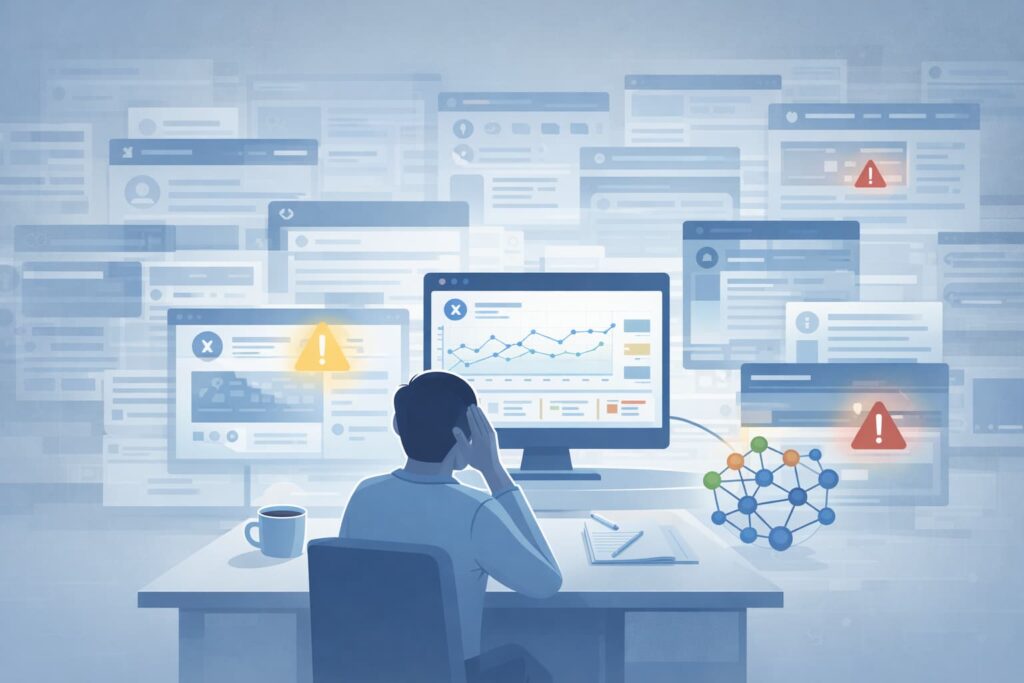
Real-Time Sentiment Analysis
Knowing you were mentioned isn’t enough. What matters is how people feel when they mention you. Our sentiment analysis looks at language patterns, phrasing, and tone to classify mentions as positive, negative, or neutral.
We learned early on that simple keyword rules don’t work well. People joke. They complain politely. They praise with caveats.
That’s why we added confidence scoring. Each sentiment label comes with a level of certainty, helping teams decide what needs attention first. A high-confidence negative mention is treated differently than a low-confidence neutral one.
We’ve seen cases where a tweet appeared neutral but carried frustration through wording and timing. Without sentiment analysis, it would have been ignored. With it, the team stepped in early and avoided escalation.
This capability helps teams:
- Prioritize responses without reading every mention
- Track emotional shifts during launches or incidents
- Measure how sentiment changes over time
It turns raw mentions into something understandable and actionable.
Customizable Alerts
No one can watch a dashboard all day. That’s why alerts matter. We designed alerts to be flexible, because every team watches different risks. Some care about product issues. Others track leadership mentions or competitor comparisons. Alerts can be set by keyword, sentiment level, volume spikes, or combinations of all three.
Common alert types include:
- Brand name + negative sentiment
- Competitor name mentioned alongside complaints
- Sudden spikes in mention volume
- Mentions tied to a specific product or feature
In one scenario, a team received an alert when their brand and a competitor were mentioned together in a negative post. That early signal helped them respond calmly and publicly, earning praise for transparency.
Alerts help teams move faster without drowning in noise. They also reduce stress. Instead of wondering what they missed, teams know they’ll be notified when something matters.
AI-Powered Enhancements: Deep Dive into Brand Perception
AI Search Monitoring
Search behavior is changing fast. Many people now ask AI systems instead of search engines. We saw this shift early, and it raised a new question: how do these systems describe brands?
Our AI search monitoring tracks how brands appear in tools like Google AI Overviews and large language models. We monitor how products are summarized, which competitors are mentioned, and what strengths or gaps show up.
In one review, a brand discovered that AI tools consistently left out a key differentiator. That insight led to changes in public content, documentation, and FAQs. Within weeks, AI summaries improved.
This matters because AI responses influence perception at scale. Monitoring them gives teams a chance to correct inaccuracies before they spread.

Advanced Keyword Tracking and Clustering
Basic keyword tracking works until language gets messy. Customers rarely use the same words teams expect. We built advanced keyword tracking to reflect how people actually talk.
Related terms, variations, and product nicknames are grouped together so nothing slips through gaps in phrasing. When feedback arrives in different forms across platforms, teams still see it as one connected signal instead of scattered noise.
Instead of seeing “500 mentions,” teams see patterns like:
- 200 mentions about customer support
- 150 mentions about ease of use
- 90 mentions about integrations
We’ve watched teams use this insight to prioritize roadmap changes and messaging updates. It turns feedback into a clear list of themes instead of scattered opinions.
Competitor Benchmarking
Reputation doesn’t exist in a vacuum. Context matters. We include competitor benchmarking so teams can see how they compare. Share of voice only becomes useful when paired with meaning. We don’t just show how often a brand is mentioned compared to competitors.
We look at why those mentions exist and how people feel about them. In practice, this reveals moments where a competitor may dominate attention for the wrong reasons, or where quieter brands earn trust without noise. That context turns share-of-voice from a vanity metric into a strategic signal.
Sometimes a competitor dominates discussion volume, but sentiment is negative. Other times, a quieter brand earns consistently positive feedback. Seeing both helps teams adjust strategy.
We’ve seen brands realize they were strong on LinkedIn but invisible on X, or popular in reviews but absent in news coverage. Those insights shape channel strategy quickly.
Plan Comparison: Choosing the Right Features for Your Needs
We structured the plans around how monitoring actually scales in real teams. Early on, visibility is the priority. As volume grows, patterns matter more than counts. At scale, flexibility and support become non-negotiable.
We’ve watched teams move through these stages naturally, often upgrading not because of feature pressure, but because the questions they needed answered became more complex.
| Feature | Basic (5,000) | Pro (20,000) | Enterprise |
| Social Media Monitoring | ✅ | ✅ | ✅ |
| Real-Time Sentiment Analysis | ✅ | ✅ | ✅ |
| Basic AI Search Monitoring | ✅ | ✅ | ✅ |
| Full AI Monitoring | ❌ | ✅ | ✅ |
| Advanced Keyword Tracking | ❌ | ✅ | ✅ |
| Custom Sources | ❌ | ❌ | ✅ |
| Dedicated Support | ❌ | ❌ | ✅ |
From what we’ve observed:
- Smaller teams often start with Basic to stay focused
- Growing teams shift to Pro once trends matter more
- Larger teams rely on Enterprise for scale and support
We’ve seen smaller teams start with Basic and upgrade as volume grows. Larger organizations often begin with Pro because deeper insight matters early.
Integrating Monitoring into Your Strategy
Monitoring only matters when it shapes real decisions. We built our features to fit into daily workflows, not sit on the side as reports people skim once a week. The insights flow directly to the teams who need them, while there’s still time to act.
Sentiment analysis helps customer service spot which issues need attention first, so urgent problems don’t get buried under routine feedback.
AI search monitoring plays a different role, but it’s just as practical. We use it to check how our brand shows up in AI-driven search results and summaries, then adjust content when gaps appear. That feedback loop keeps messaging aligned as search behavior changes.
Over time, it helps ensure the story being told about the brand matches reality.
Alerts are where strategy turns proactive. Instead of waiting for reports, teams get notified the moment something shifts.
- Negative sentiment spikes trigger early review
- Sudden volume increases flag emerging issues
- Keyword alerts surface high-risk conversations
- Competitor mentions provide real-time context
The dashboard works best when it replaces guesswork. Instead of switching tools or waiting for updates, teams open one view to see sentiment shifts, alert activity, and emerging topics together.
In daily use, this shortens decision cycles. Marketing, support, and communications work from the same signals, which reduces back-and-forth and keeps responses aligned.
FAQ
How does brand reputation monitoring help teams act early?
Brand reputation monitoring helps teams see issues as they start. With real-time mention tracking and online review alerts, teams notice changes fast. Cross-platform scanning shows what people say across channels in one place. This makes it easier to act early, reduce risk, and protect trust before small problems grow larger.
Why is review sentiment analysis better than counting mentions?
Counting mentions shows volume, not meaning. Review sentiment analysis explains how people feel. It uses sentiment polarity scoring and sentiment score confidence to label feedback as positive, negative, or neutral. This helps teams avoid false alarms and focus on real issues that affect brand health and customer trust.
How does real-time mention tracking work across platforms?
Real-time mention tracking scans many platforms at once. It pulls data from social media monitoring, forums, videos, and news site monitoring. Platform-specific scanning helps catch fast posts and slower articles. A unified brand dashboard brings everything together so teams don’t miss important conversations.
How do AI-powered brand insights support long-term planning?
AI-powered brand insights show patterns over time. Topic clustering AI groups similar feedback, while emerging trend detection highlights new risks or opportunities. Historical trend comparison and time-series analysis help teams track brand health metrics and plan ahead using clear, data-driven signals.
How do alerts help with crisis response without overload?
Alerts work best when they stay focused. Crisis response alerts flag negative review spikes and sudden mention volume spikes. Customizable keyword sets and false positive filtering reduce noise. This setup helps teams respond fast, stay calm, and manage brand crises without constant interruptions.
Action-Oriented & Confident
BrandJet’s review monitoring features give teams clarity and speed in a noisy digital world. They turn scattered online chatter into structured insight you can act on, across human conversations and AI-driven systems.
Instead of reacting late, teams spot signals early, understand context, and respond with confidence. This is about shaping how your brand is seen, not just watching it happen.
Ready to take control of your reputation? Start with BrandJet and put insight to work today.
References
- https://www.pewresearch.org/journalism/fact-sheet/social-media-and-news/
- https://hbr.org/2014/10/how-online-reviews-influence-sales
Related Articles

More posts

Prevent Internal Misinformation in Organizations
Prevent internal misinformation by establishing clear communication protocols, verification processes, and a culture...

Internal Crisis Communication: How Teams Stay Aligned
Internal crisis communication is the process organizations use to share clear, accurate information with employees...
Influencer Crisis Detection for Modern Brands
An influencer crisis can cost you trust and revenue. It’s about spotting the danger signs before they blow up. The...