
Table of Contents
Managing influencer crises rarely starts with your own mistake, it often starts with watching someone else’s go viral.
When a paid creator promotes a rival brand on your dime, the damage is fast and measurable: campaigns can lose up to 42% engagement, and trust can crumble for months. The upside is, these failures leave a trail.
You can study them, patch your weak spots, and protect your brand before it’s tested. Keep reading to see how.
Key Takeaways
- Swift, transparent action shapes crisis recovery and can rebuild lost trust.
- Strong contracts and deep vetting are your first and most reliable line of defense.
- Real-time monitoring tools help you catch problems early, before they spread.
Managing Influencer Exclusivity Crises: Lessons from Competitor Slip-ups

Sometimes the cleanest warning signs come from watching a competitor’s influencer crisis unfold in public.
You see the angry comments, the confused buyers, and the rushed PR statements, all playing out in real time, situations that benefit greatly from influencer activity tracking to flag risks before they snowball. You also see how much of it could have been prevented with better prep.
A “competitor influencer crisis” is simple on the surface. You pay a creator to represent you, but they promote a rival instead. Yet the impact runs deeper than a broken clause. It questions whether your partnerships are serious, whether your brand is organized, and whether your audience can trust what they see.
Before we get into the stories and tactics, here’s a quick TL;DR snapshot of how these crises differ and what they cost.
Crisis Types and Their Impact
| Crisis Type | Example | Trigger | Immediate Impact | Longer-Term Effect |
| Direct Exclusivity Breach | Marcus Chen / Razer headset case | Competitor product used on sponsored live | 42% drop in campaign engagement | Contract terminations, stricter clauses |
| Indirect Sentiment Backlash | “Emma Roberts” style sentiment shift | Controversial social/mental health remark | 35% negative sentiment toward sponsors | Brand value questions, trust erosion |
| Contractual Blind Spot Misuse | Old posts, “always-on” feeds | Unclear rules on old or incidental posts | Confused audience, mixed brand signals | Policy overhauls, new content approval rules |
When you understand these patterns, you can design an influencer strategy that bends under pressure, but doesn’t break.
The High Cost of Influencer Exclusivity Breaches
Imagine this: a high-energy livestream, thousands of viewers, chat going nonstop. You’ve sponsored the stream, your logo is present, your gear is on screen. Then the headset glitches. The creator reaches off-camera, grabs a rival brand’s headset, and says, “Honestly, this one’s way more comfortable.”
The loss isn’t abstract. According to a recent survey, 71% of consumers say they regret purchases influenced by creator recommendations, revealing a growing trust gap that can worsen fallout during influencer crises.[1]
In a 2024 case like this, the sponsoring brand watched a 42% drop in campaign engagement. Viewers noticed the switch instantly. Screenshots spread on X, TikTok, and Discord within minutes. What should have been a smooth B2B funnel driver suddenly became a live case study in misalignment.
This kind of crisis doesn’t just create a wave of negative comments. It can:
- Shift attention away from your product’s strengths.
- Turn Q&A threads into contract debates.
- Make B2B buyers question your professionalism.
Instead of prospects asking, “How does your solution solve my problem?” they start asking, “If your own partners ignore your rules, what else is messy?”
How Different Triggers Cause Similar Damage
Two very different actions can still hurt you in almost the same way:
- Direct Contract Violation
An influencer uses or praises a competitor’s product during your sponsored stream.- Impact: Fast, public, and severe.
- Usual response: Contract review, partnership pause or termination.
- Indirect Sentiment Shift
An influencer makes a harsh or clumsy comment about mental health or a sensitive social topic.- Impact: About a 35% negative sentiment swing toward their sponsors.
- Usual response: Statement, distancing, sometimes full separation.
Even though the triggers differ, both events drag your brand into a conversation you didn’t choose. So, if you don’t set your guardrails up front, the cost shows up later in trust and pipeline.
Common Triggers for Competitor-Related Crises

Most competitor-related crises don’t come out of nowhere. They tend to grow out of fixable gaps in how you vet, contract, and monitor your partners.
In fact, a recent industry analysis shows that 73% of influencer marketing campaigns fail to meet primary performance goals, including engagement and brand alignment, often due to poor creator selection or compliance issues.[2]
1. Weak Contracts
Old influencer templates often weren’t built for 24/7 social media.
They usually miss:
- Livestream coverage: Contracts cover posts and videos but say nothing specific about live sessions.
- Competitor display rules: No clear language about showing or using rival products on camera.
- Legacy content: No plan for old rival posts that stay public while your deal is active.
Without clear clauses, influencers may not even realize they’ve crossed a line until the clip blows up.
2. Shallow Vetting
On paper, a creator might look perfect. Good follower count, strong engagement, clean feed. Yet surface-level checks can hide deeper risks.
Common misses include:
- Only scanning follower and like numbers.
- Ignoring past paid partnerships with your direct rivals.
- Skimming right past old scandals, harsh brand rants, or messy comment threads.
If you don’t check that history, your team might be shocked by “sudden” backlash that was actually predictable.
3. Narrative Backlash
Sometimes your brand doesn’t do anything wrong at all. An influencer posts a controversial opinion. People disagree. Then the crowd zooms out and starts asking, “Who pays this person?”
Pretty quickly:
- Users pull sponsor lists into quote tweets.
- Your logo shows up in criticism threads.
- You’re asked to comment on a story you didn’t start.
When you study how your competitors get swept into these storms, you can update your own rules, before your name appears in the same way.
Case Study: The Razer vs. Marcus Chen Incident
The 2024 Marcus Chen incident is the kind of moment most brands fear, mainly because it happened live.
Marcus Chen, a well-known gaming creator, had an exclusive deal with Razer. During a sponsored livestream, his Razer headset started to cut out. Instead of troubleshooting off-camera, he grabbed a competitor’s headset from his desk, put it on, and casually mentioned how comfortable it felt.
The internet did the rest. Clips of the switch spread in minutes across X and TikTok, the kind of moment that reinforces the value of monitoring influencer-related crises instead of hoping issues disappear.
Viewers debated whether the sponsorship was fake, whether the hardware was bad, and whether the contract even mattered.
Immediate Brand Response
Razer’s team was already running real-time monitoring on the stream, so they caught the breach as it happened. Their response was direct:
- They cut the active livestream partnership quickly.
- They reached out to Marcus’s team to freeze further sponsored segments.
- They issued a public note explaining their exclusivity rules and the nature of the breach.
This transparency mattered. It showed both customers and other partners that Razer took their contracts seriously, rather than just hoping the clip would disappear on its own.
Outcome and Recovery
The short-term impact wasn’t pretty:
- Campaign engagement dropped by around 42%.
- Comment sections filled with doubts about the brand and the deal.
- Some B2B partners asked for clarity on future collabs.
Yet Razer didn’t just patch the one contract. They used the moment to:
- Rewrite standard influencer agreements with clearer livestream rules and explicit bans on rival product use during any sponsored content.
- Roll out automated alerts for competitor product mentions and sudden spikes in negative sentiment.
Within a few months, sentiment recovered by about 23%. The incident turned into an internal benchmark on how to turn a public breach into a case for stronger systems and better monitoring.
Strategic Recovery: Swift Action and Transparency

When a crisis hits, speed almost always beats polish. If you wait too long, the audience builds its own story, and you’ll be chasing it instead of leading it.
One simple mental model that shows up across the best responses is Cut-and-Clarify.
The Cut-and-Clarify Method
1. Cut
- Pause or end the partnership when the breach is clear.
- Protect your team’s focus and your brand’s credibility first.
- Avoid sending mixed signals by “quietly waiting it out.”
2. Clarify
- Explain what happened in plain, direct language.
- Share which rule or value was broken.
- Outline what changes you’re making, if any, to prevent repeats.
A well-known cosmetics brand (think MAC-style case) followed this pattern after one of its influencers made comments that clashed with the brand’s public stance. They:
- Cut ties within 24 hours.
- Posted a short, precise public note explaining the misalignment.
- Reaffirmed their values to their community.
Because they moved quickly and clearly, most of the heat stayed on the influencer’s remarks instead of the brand’s silence, something teams can verify through ongoing influencer sentiment analysis during crisis.
Data as Your Recovery Scorecard
The job doesn’t end with the statement. You need to test whether your response is actually working.
So, you track:
- Sentiment trends across social and news mentions.
- Positive vs. negative brand references week over week.
- Click-through and conversion from influencer-linked content.
- Branded search interest, especially around your name plus “scandal” or “controversy.”
Then, you loop this data back to:
- Sales, so reps know when prospects are less anxious.
- Leadership, so decisions are grounded in numbers, not guesswork.
- Marketing, so future campaigns account for what you learned.
Handled this way, crisis management becomes a measurable workflow instead of a messy panic.
Prevention Framework for Digital Marketers
A strong prevention framework turns competitor slip-ups into early warnings for your own program. You don’t need to copy your rivals’ mistakes to learn from them.
Here’s a simple structure that fits most B2B influencer workflows.
1. Deep Vetting
Go beyond surface engagement. A careful pre-check can reduce partnership risk by up to 42%.
Focus on:
- Audience authenticity: Spot fake followers or engagement pods.
- Crisis history: Search for past apologies, “notes app” posts, or public feuds.
- Brand alignment patterns: Check whether they frequently jump between direct competitors.
This level of vetting should be as routine as checking impressions.
2. Exclusivity Guardrails
Your contracts should be your rulebook, not just a loose agreement.
Include:
- Clear bans on competitor products: No promotion or incidental display of rival brands during paid content.
- Channel-specific rules: Live streams, short-form posts, static content, and stories all need explicit coverage.
- Pre-approval flows: Require pre-approval for sponsored content before it goes live, especially in “always-on” creators’ feeds.
A simple review step, even if it feels small, can block major misalignments.
3. Diversification
Putting your hopes into a single “hero” creator can turn into a single point of failure.
Instead:
- Build a mixed roster of large, mid-tier, and niche influencers.
- Balance by audience size, content style, and platform.
If one partnership hits a rough patch, your entire program isn’t frozen. This also gives you firmer ground in negotiations, because you’re not overdependent on one name.
Future-Proofing Influencer Workflows

The strongest programs don’t rely on manual checking and good intentions. They treat influencer work like any other serious channel: automated, measurable, and tied to business outcomes.
From Manual Oversight to Real-Time Alerts
Instead of someone on your team trying to watch every live or post, use tools that scan brand mentions, competitor mentions, sentiment spikes in real time.
Imagine getting a notification the second your influencer says a rival’s name or shows a competing product on stream. That early warning lets you step in before a clip becomes a crisis.
Connecting Influencer Data to Your Pipeline
Influencer reporting shouldn’t float in its own corner.
Link it to:
- Site traffic driven by creator content.
- Lead form completion tied to specific campaigns.
- Sales pipeline stages, especially where influencer touchpoints nudge deals forward.
Now, when a crisis or misstep hits, the cost is visible in pipeline numbers, not just social comments. That makes brand safety a company-wide issue, not just a marketing problem.
Long-Term Alignment Over Short-Term Reach
Finally, the mindset shift.
Instead of chasing the biggest one-off spike, focus on creators who:
- Share your core values.
- Understand your audience’s real problems.
- Are open to multi-campaign or ambassadorship roles.
This kind of alignment makes competitor crises less likely, because the relationship runs on shared principles, not just a paycheck. You’re building a network of partners who treat your brand as part of their identity, not just a temporary sponsor.
FAQ
How can competitor influencer crisis case studies help brands avoid repeat mistakes?
Competitor influencer crisis case studies let brands learn in advance, without paying the price of failure. By watching where others slipped, whether through weak contracts, tone-deaf remarks, or undisclosed competitor promotions, you can identify structural gaps before signing your next creator.
This proactive view gives teams clearer guardrails, faster internal decision paths, and smarter partnership selection from day one.
What early signals should marketers watch when analyzing competitor influencer crises?
Patterns often show up long before a crisis goes public. Competitor influencer crisis case studies highlight early red flags: small shifts in sentiment, contradictory brand endorsements, or creators suddenly removing posts.
These indicators help marketers forecast reputational risk and intervene quickly. Instead of reacting once it’s trending, your team can adjust messaging, contracts, or approvals before damage spreads.
Why are exclusivity rules crucial in avoiding influencer-led brand confusion?
Competitor influencer crisis case studies repeatedly prove that exclusivity isn’t just legal language, it protects clarity. When creators casually use or mention rivals, audiences assume endorsements are interchangeable.
Clear exclusivity clauses, combined with content approval and platform-specific rules, prevent confusion and safeguard trust. If audiences can’t tell what brand a creator represents, your marketing spend loses power instantly.
How should brands respond when caught in a crisis they didn’t cause?
Sometimes backlash toward a creator sweeps brands into collateral damage. Lessons from competitor influencer crisis case studies show that silence rarely helps.
The most successful responses combine speed, transparency, and values alignment, state your stance, specify actions taken, and clarify expectations for partners going forward. When brands take control of the narrative early, trust stabilizes faster.
What systems help teams stay ahead of emerging influencer issues?
Influencer programs work best when built around monitoring, not guesswork. Competitor influencer crisis case studies emphasize the role of real-time tools, social listening, sentiment analysis, and flagging competitor product mentions.
This shifts response from reactive to predictive. Instead of manually checking feeds, brands receive alerts wwarpie changes, helping them step in before audiences start asking hard questions.
Turning Competitor Crises Into Your Safety Net
Competitor influencer crisis case studies don’t just make good gossip; they’re blueprints for your own protection. When you pay attention to why those partnerships failed, you can tighten your vetting, sharpen your contracts, and rely on real-time alerts instead of luck.
That’s how you keep trust steady, even when the feed is noisy. If you want to build that kind of safety into your influencer program, BrandJet can help you monitor, analyze, and respond faster.
References
- https://www.netinfluencer.com/71-percent-of-consumers-regret-influencer-driven-purchases-as-trust-gap-widens/
- https://www.launchpointhq.com/blog/why-73-of-influencer-campaigns-fail/
Related Articles

More posts

Prevent Internal Misinformation in Organizations
Prevent internal misinformation by establishing clear communication protocols, verification processes, and a culture...

Internal Crisis Communication: How Teams Stay Aligned
Internal crisis communication is the process organizations use to share clear, accurate information with employees...
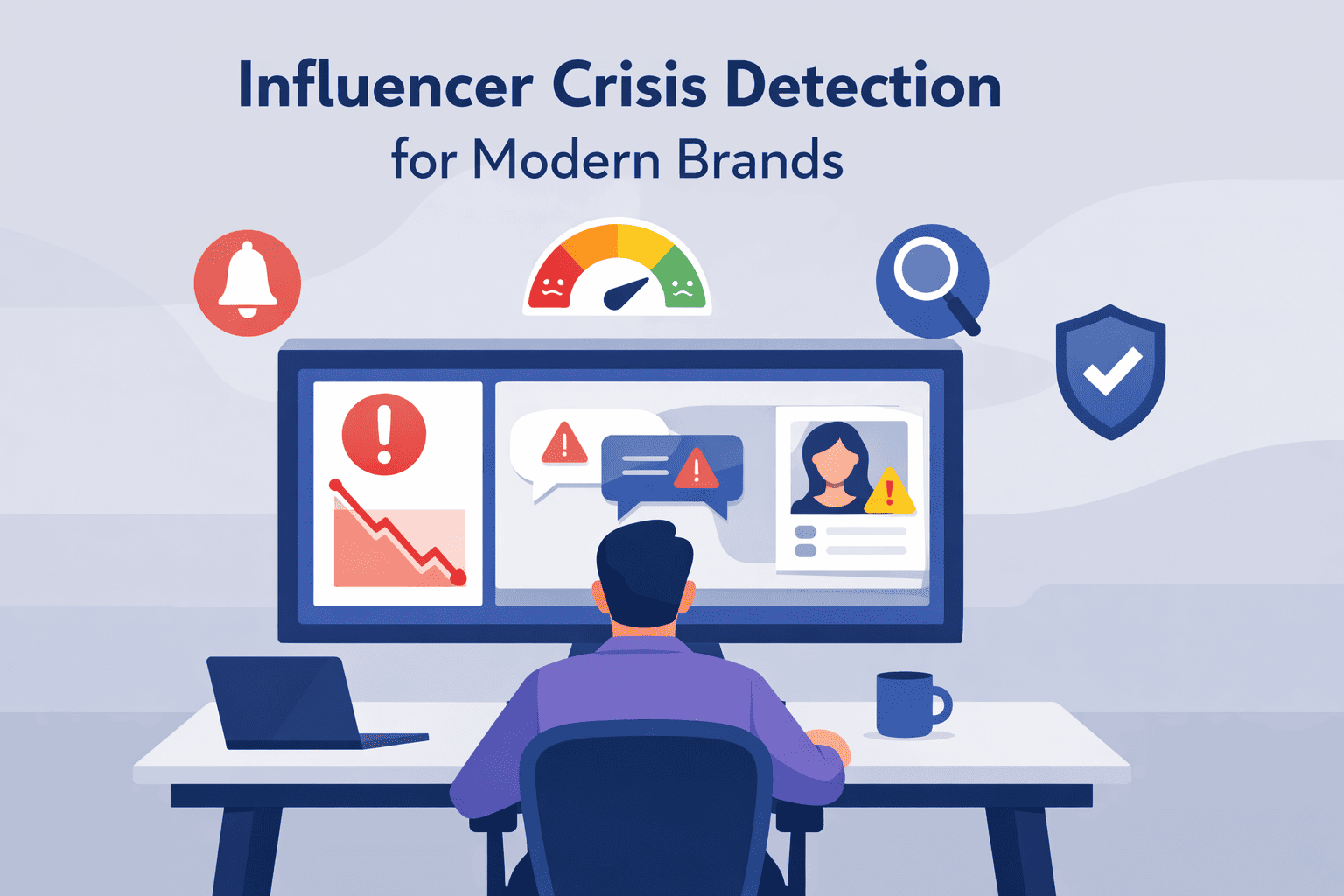
Influencer Crisis Detection for Modern Brands
An influencer crisis can cost you trust and revenue. It’s about spotting the danger signs before they blow up. The...