


Table of Contents
Learn how cold email outreach works step by step in 2026, plus tips to personalize messages, improve deliverability, and boost reply rates for B2B lead generation.
Cold email outreach means sending emails to potential leads who haven’t contacted you yet. The goal is to start a conversation, book a call, or set up a demo, usually as the first step in your outbound sales funnel.
At BrandJet, we combine cold emails with LinkedIn and WhatsApp. We focus on timing, personalization, and precision, not blasting messages that go nowhere.
If your outreach feels inconsistent or slow, the issue usually isn’t effort, it’s structure. BrandJet helps you centralize campaigns and see what actually drives replies.
Cold Outreach in 2026
- Relevance Over Scale: Keep emails under 125 words; personalized triggers outperform generic templates.
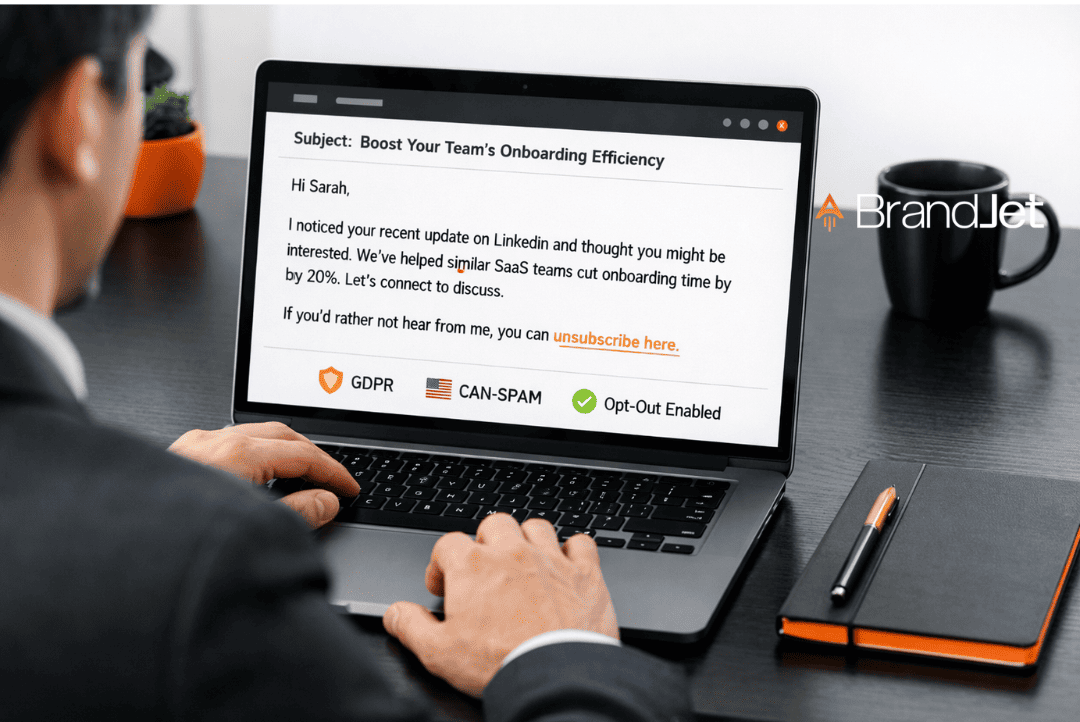
- Deliverability is Key: Use domain warming and strict compliance (GDPR/CAN-SPAM) to stay out of spam.
- The Multi-Channel Edge: Combining email with LinkedIn or WhatsApp can boost conversions by as much as 50% compared with email alone in many B2B campaigns.
What Is Cold Email
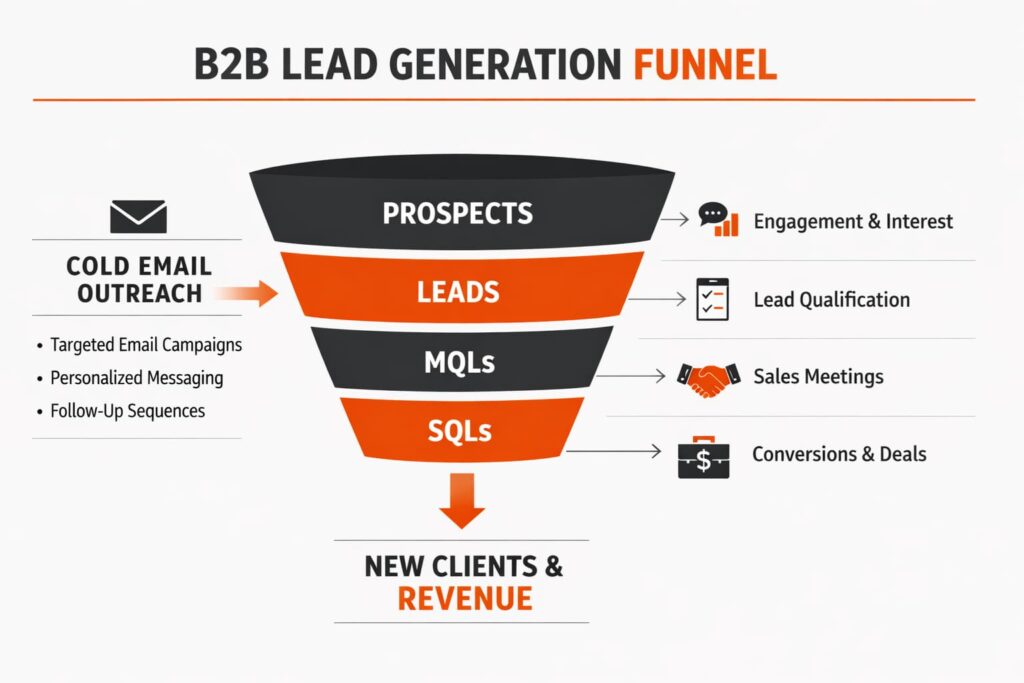
Cold email is reaching out to someone via email who hasn’t contacted you before.
The goal is to start a conversation, book a call, or schedule a demo.
According to a 2024 paper on Research Gate, an AI‑powered cold email generator argues that automation is crucial for startups and small businesses, and that AI can help generate tailored cold emails by understanding user intent and audience.
It’s a common tactic in B2B lead generation.
Many teams combine cold emails with LinkedIn, phone calls, or social DMs to increase visibility.
How Cold Email Outreach Works (Step by Step)
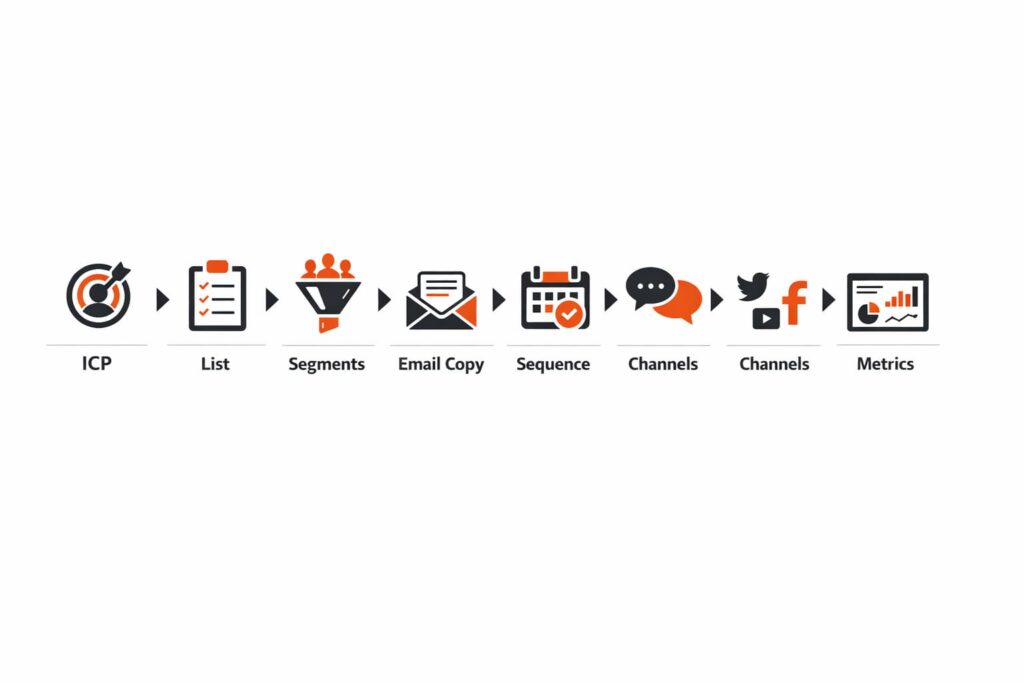
Here’s the typical flow from start to finish:
1. Define Your Ideal Customer Profile (ICP).
Write a one‑sentence description of who you want to reach. Include industry, team size, key job titles, and 2–3 core pains.
Example: “B2B SaaS, 20-200 employees, VP of Sales with no‑show demos and long sales cycles.”
2. Build a Clean, Verified Prospect List.
Use LinkedIn filters (industry, headcount, title) to find matching companies and people based on ICP.
Export or copy them into a sheet or your outreach tool. Run every email through a verifier so bounces stay low and your domain stays healthy.
3. Segment Prospects by Relevance and Signals.
Group contacts into simple buckets like “recently funded,” “hiring SDRs,” or “using HubSpot.” Aim for segments where the core situation is similar.
That way, each group can get a slightly different angle and first line.
4. Write Short, Focused Emails.
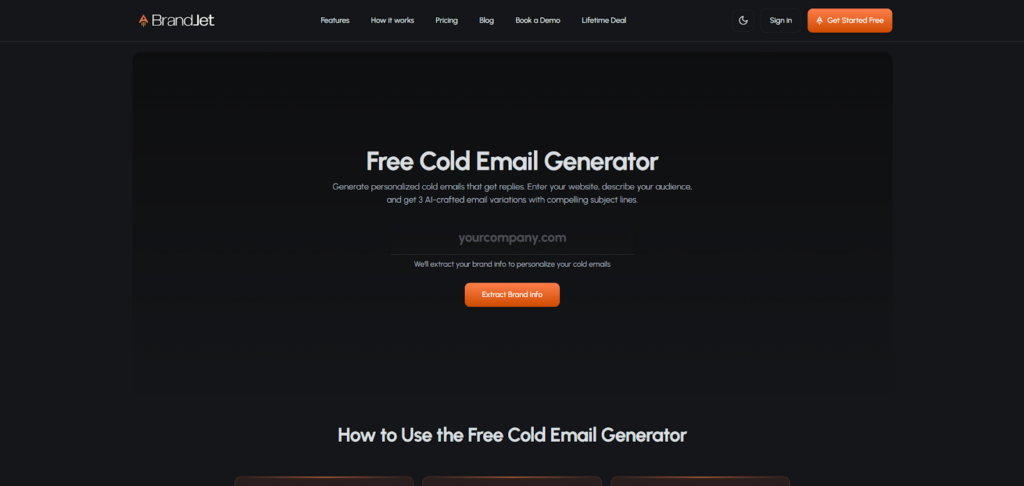
For each segment, write a 50-125 word email.
Call out one likely problem, one outcome you help with, and one quick proof point. End with a simple CTA like “Open to a quick 15‑minute call next week?”
BrandJet’s cold email generator can draft that structure from your website and offer, so you only customize the first line and CTA.
5. Schedule a Follow-up Sequence Over 1–3 Weeks.
Turn the first email into a small sequence.
For example:
- Day 1: Intro
- Day 3: Social proof
- Day 7: Objection or timing check
- Day 14: Polite breakup
Set this once in your outreach tool so every new contact automatically follows the same timeline.
💡 ProTip: The last follow-up often gets replies because it removes expectation.
6. Layer in other channels to build recognition.
Between emails, view the prospect’s LinkedIn profile. When it makes sense, send a light connection request or a short WhatsApp nudge.
The goal is simple: by the time they see email two or three, your name already feels familiar.
7. Track performance and keep iterating.
Watch open rate to judge subject lines and sender trust. Watch reply rate and meetings booked to judge message and targeting.
In BrandJet, you can see which sequences and segments get replies in one place, then pause weak variants and double down on the ones that generate calls.
Cold Email Vs Cold Call
Both methods aim to start conversations, but they behave differently in execution.
| Method | Benchmarked “Good” Reply Rate | Conversion Potential | Pros | Cons |
| Cold Email | 4-10% | Moderate | Scalable, trackable | Needs warm-up, risk of spam |
| Cold Call | 1-3% | High if reached | Direct, immediate feedback | Labor-intensive, low reach |
Cold email is easier to scale and track, while cold calling gives immediate feedback but reaches fewer prospects.
How To Personalize Emails
Personalization is not about inserting names or company info. It’s about showing awareness of something specific.
What Strong Personalization Looks Like
Strong emails usually include:
- A real trigger (funding, hiring, launch, new role).
- A specific observation tied to that trigger.
- A clear connection to your offer.
This makes the message feel intentional, not random.
Weak VS Strong Examples
Weak:
“I saw your company is doing great…”
Strong:
“Noticed you’re hiring SDRs, usually that signals pipeline pressure.”
💡 ProTip: If your first line could apply to 100 people, it’s not personalized enough.
Email Tools And Automation
Automation speeds things up, but tools only work when the system behind them is clear. Most teams don’t lack tools, they lack connection between them.
Common Tool Stack
Most outreach setups include:
- Outreach tools (BrandJet, Lemlist, Instantly) → send and sequence emails.
- CRM platforms (HubSpot, Salesforce) → manage pipeline.
- Data tools (Apollo, ZoomInfo) → source leads.
Each one handles a piece. None handle everything.
Where Tools Break Down
The issue shows up in the gaps:
- Leads updated in one tool, outdated in another.
- Outreach sent without context.
- Results tracked separately from actions.
That disconnect slows iteration and hides what actually works.
As highlighted by Forbes Business Council:
“In 2026, that’s what earns replies. Not scale. Not templates. Just relevance. […] Compliance is the new credibility. Trust is now built at the infrastructure level. When your domains are aligned, your complaint rate is under control and your opt-outs are respected, you don’t just meet compliance; you prove integrity.” – Forbes
That shift is subtle, but real. Deliverability, domain setup, and opt-out handling now shape trust before the message is even read.
💡 ProTip: If your reply data lives in a different place than your sending tool, you’re guessing more than you think.
If your outreach stack feels disconnected, BrandJet brings signals, messaging, and follow-ups into one system so you don’t lose context between tools.
How To Measure Cold Email Success
Trackable metrics help optimize campaigns:
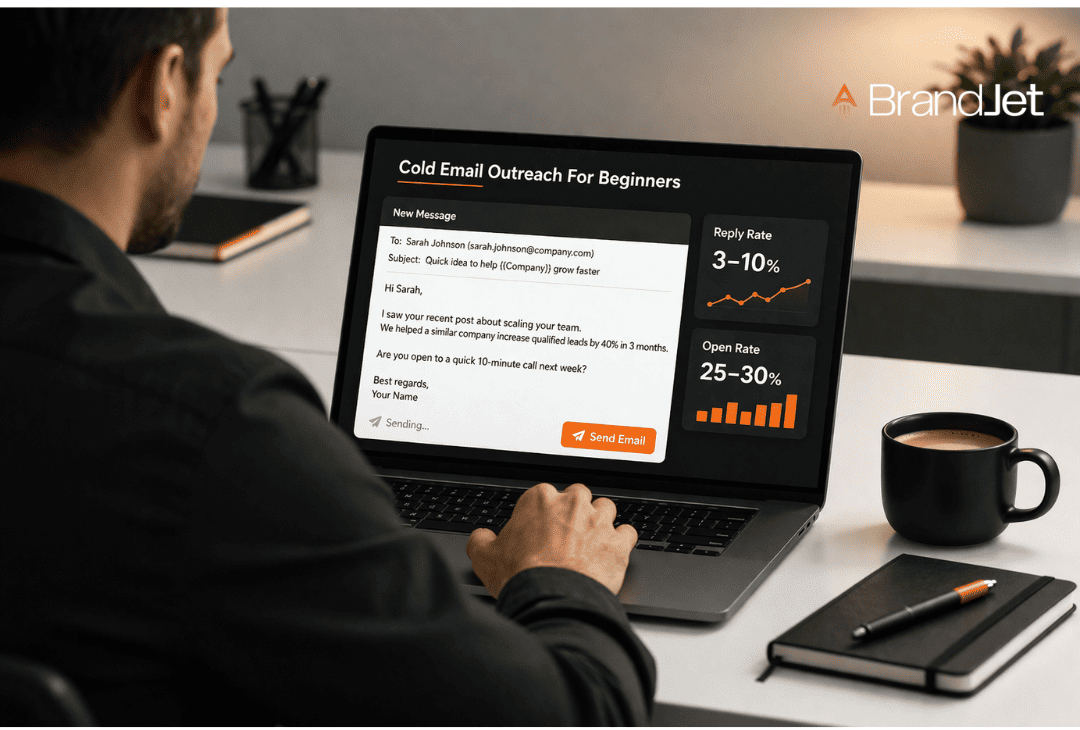
- Open rates: many B2B campaigns land around 20-40% with good targeting and deliverability.
- Reply rates: typically 2-6%, with 5-10% possible when personalization and targeting are strong.
- Test timing, frequency, and concise copy to increase booked calls and opportunities.
How Is Cold Email That Works Looks Like
Cold email works best when you reach out with context and relevance, not a blind list. Timing and clarity determine whether a prospect actually replies.
Cold Email Example
Hi {{FirstName}},
Saw you’re hiring {{# of}} SDRs at {{Company}} and recently announced your latest funding round. That usually means more demos to run with the same CS and AE bandwidth.
We help SaaS teams reduce demo no‑shows and shorten time‑to‑close by adding automated reminders and post‑demo follow‑ups on email and WhatsApp.
Worth a quick 15‑minute call to see what this could look like for your current stack?
Best,
{{YourName}}
💡 ProTip: Use AI to draft the first version, then refine manually. The signal comes first; AI saves time.
FAQ
What is the difference between cold email and email marketing?
Cold email goes to people who never joined your list and often don’t know your brand yet. Email marketing goes to subscribers or customers who gave permission, like newsletter signups, and focuses on updates, education, and retention.
How important are subject lines in cold email outreach?
Subject lines are critical because they decide if your email gets opened. Clear, specific subject lines routinely beat vague or clickbait lines and can increase open rates by several dozen percentage points.
Do I need a separate domain or inbox for cold email?
Most cold email teams use separate domains or inboxes to protect their main brand domain. This setup makes it safer to warm up new inboxes, handle higher sending volumes, and keep deliverability issues away from day‑to‑day business email.
How do you find good prospects for cold email outreach?
Teams usually start with B2B data tools and LinkedIn filters such as industry, company size, role, and region. They then refine the list using signals like funding, recent hiring, or tech stack so each prospect closely matches the offer.
What should I avoid saying in a cold email?
Avoid big promises you cannot prove, spammy phrases, and pushy sales language. A strong cold email focuses on one realistic benefit, gives a simple proof point, and uses plain, honest wording that sounds like a real person, not a mass template.
Take Control of Your Cold Outreach
If your emails aren’t getting responses, and you feel like you’re spinning your wheels. Sending more messages doesn’t fix the problem, it just adds noise.
BrandJet makes it simple to get smarter results without extra effort. You can centralize campaigns, monitor brand sentiment in real time, and automate follow-ups so your outreach actually connects. Use tools that work for you instead of against you, and see the difference in every touchpoint.
Start with BrandJet today.

More posts

Cold Email Vs Warm Email Outreach: Strategy Guide
Cold email vs warm email outreach: compare strategies, learn when to use each, and improve lead generation, response...
Is Cold Email Outreach Legal? A Clear 2026 Guide
Is cold email outreach legal? Understand CAN-SPAM, GDPR, and key laws so you stay compliant and avoid costly mistakes....
Cold Email Outreach For Beginners (Simple Guide)
Cold email outreach for beginners made simple: follow clear steps, stay compliant, and improve reply rate with proven...