


Table of Contents
To improve prevention workflows, organizations must redesign processes so errors are stopped before they happen, using validation gates, automation safeguards, and structured human oversight. In cybersecurity, 95% of breaches involve human error, according to the IBM Security Cost of a Data Breach Report.
That figure makes one thing clear: reactive fixes cost more than prevention. Across marketing, healthcare, manufacturing, and SaaS operations, tightening prevention workflows reduces risk before issues spread.
We see this at BrandJet, where breakdowns often start upstream, long before response teams step in. Keep reading to see how structured safeguards reduce risk and strengthen reliability.
Key Takeaways
- Prevention workflow optimization reduces error rates by combining automation safeguards with structured human review.
- Validation gates, quarantine lanes, and audit trails stop cascading failures before they affect customers.
- Metrics like override rates and validation pass percentages expose weak points early.
What Does Improving Prevention Workflows Actually Mean?
Improving prevention workflows means redesigning systems so failure is stopped before execution, not cleaned up after. It relies on structured validation, automation safeguards, and clear human checkpoints. Reactive systems respond once damage happens. Preventive systems intercept risk earlier, when correction is cheaper and faster.
As highlighted by NIST
“…GOVERN, IDENTIFY, and PROTECT outcomes help organizations prevent and prepare for incidents…” – NIST
At BrandJet, prevention workflow optimization centers on three practical pillars:
- Validation before execution through data validation gates
- Automated safeguards such as anomaly detection pipelines
- Human review loops for edge cases and compliance workflow enhancement
Prevention is not about slowing teams down. It is structured speed, with safeguards placed at key decision points. These principles apply across cybersecurity, manufacturing, healthcare, and marketing automation, where reducing failure modes protects revenue and reputation.
Proactive systems consistently outperform reactive ones because they cut rework, reduce downtime, and improve confidence in execution. In brand monitoring environments like ours, upstream validation keeps misinformation out of outreach pipelines and protects operational stability.
Quarantine Your Data Chaos Before It Spreads

Create quarantine lanes for low-confidence records instead of allowing direct edits to live systems. In marketing automation and CRM platforms such as Salesforce, direct edits often trigger cascading conflicts across reports and outreach.
A quarantine workflow isolates uncertain records before they touch production data. Automation professionals on Reddit describe routing low-confidence updates into tagged queues averaging 10–20 records per day, a volume teams can review without overload.
Insights from Federal News Network indicate
“…implementing tools that not only track anomalies, but also potentially block malicious activity before they can impact operations.” – Federal News Network
At BrandJet, we see the same risk in AI perception scoring. If uncertain sentiment shifts update dashboards automatically, strategy starts reacting to noise instead of signal.
A controlled sequence keeps things stable:
- A record is flagged by a rule engine using anomaly detection
- A confidence score is assigned based on defined thresholds
- Records below 90% confidence move to a review queue
This prevents “write-first” chaos where automation overrides judgment without an audit trail. High-confidence changes can auto-approve. When uncertain data stays contained, production systems stay reliable, compliance gaps shrink, and downtime becomes less about emergency fixes and more about steady control.
How Do You Build Unbreakable Validation Gates?
Validation gates create structured checkpoints before actions go live. Gartner research on governance frameworks reports error reduction of up to 30% when validation controls are clearly defined. The goal is simple: stop flawed inputs before they trigger larger failures.
Validation is not the same as approval. Validation checks whether inputs meet predefined criteria. Approval adds human confirmation when risk increases. Strong prevention workflow optimization uses layered gates based on exposure and compliance needs.
Core validation models
| Model | When to Use | Risk Level | Human Required |
| Rule-Based | Structured inputs | Low | Rare |
| Confidence-Scored | AI recommendations | Medium | Yes |
| Dual Approval | Compliance-heavy workflows | High | Always |
Before building any gate, document the criteria. Vague rules weaken pass rates and frustrate operators, and combining this with post-crisis recovery workflows ensures lessons learned reinforce future prevention gates.
Key safeguards include:
- Audit trail implementation with timestamp logging
- Monthly tracking of validation pass rates
- Routing conflicts to review queues instead of silent rejection
- Monitoring auto-approval thresholds for drift
At BrandJet, AI-assisted prevention never overwrites brand intelligence signals without confidence scoring and human validation. When rules are documented and metrics monitored, failure reduction becomes measurable, not assumed.
Which Metrics Actually Catch Workflow Failures Early?

Prevention improves when we track validation pass rates, manual override percentages, and escalation volumes in real time. Metrics show us structural weaknesses before customers feel the impact. Without defined benchmarks, we end up relying on anecdotal feedback, which slows root cause analysis and increases rework.
The most reliable early warning system comes from consistent measurement across every stage of execution, similar to tracking crisis management metrics to prevent operational failures before they escalate.
Key metrics we monitor include:
- Validation pass rate percentage
- Manual override rate, with a target below 5–10%
- Rework frequency per workflow stage
- Time to resolution for flagged entries
- Escalation volume across departments
When we see a spike in manual overrides, we treat it as an upstream validation gate failure, not a downstream execution mistake. That distinction matters.
At BrandJet, we monitor anomaly detection pipelines and CRM data hygiene to ensure AI-powered sentiment analysis does not push flawed insights into decision-making. If override rates rise, we review threshold controls before adjusting automation.
By tracking these metrics consistently, we turn prevention into a measurable operating discipline instead of a reactive response pattern.
How Can We Burnout-Proof Prevention Workflows?
We reduce burnout when our systems lower cognitive overload through predictive filtering, structured task management, and simpler interfaces. When prevention depends only on our vigilance, fatigue builds fast. The cost shows up in avoidable mistakes.
We have learned that burnout rarely comes from workload alone. It usually grows from chaotic task delegation and constant interruptions inside poorly structured workflows.
Common triggers we see include:
- Dense dropdown interfaces with too many options
- Duplicate approval gates without clear logic
- Unplanned urgent tasks that disrupt structured work
We correct these patterns through focused UX safeguards:
- Predictive filtering to narrow selections
- Role-based workflow views
- Preloaded common selections to reduce input errors
- “Last used” memory features for repetitive actions
At BrandJet, we balance progressive disclosure with power-user flexibility so we do not slow experienced operators. We also use predictive analytics to support safety controls without adding friction.
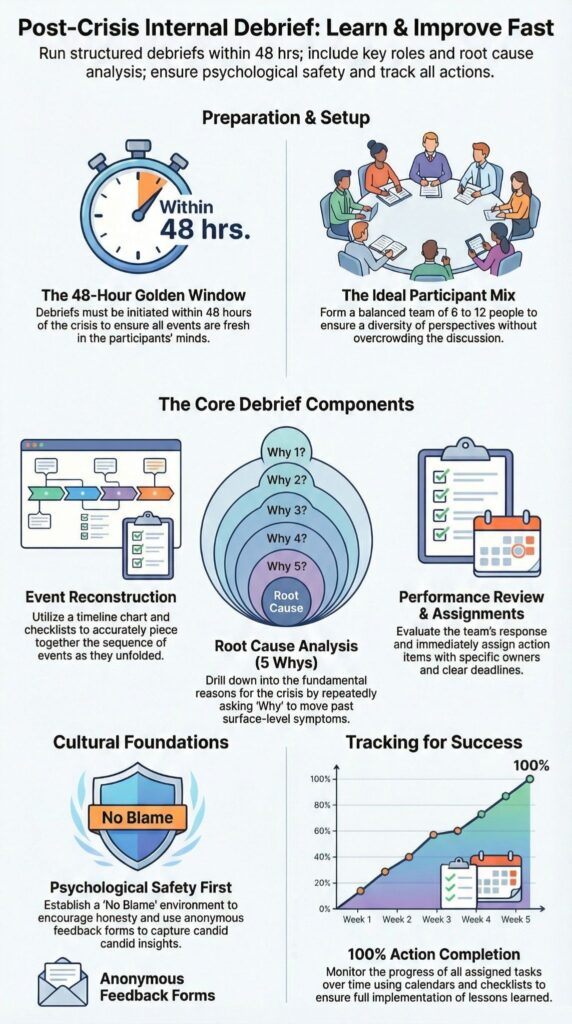
When we design systems that protect our attention while preserving validation integrity, we reduce error rates and protect our teams from steady cognitive drain, much like incorporating post-crisis internal debrief routines to strengthen team resilience.
What Edge Cases Do We Often Ignore in Prevention Workflows?
Credits : IriusRisk
We know most prevention guides assume perfect compliance. In reality, our workflows tend to break when we bypass safeguards under pressure. When deadlines tighten, manual overrides increase. If systems lag or queues grow, we look for shortcuts.
We have seen this in high-load environments where dynamic delays slow part selection tools or review dashboards. When response time drops, we are more likely to skip quarantine lanes just to keep moving. Prevention has to account for our impatience and for technical limits.
Common risks we cannot ignore include:
- Edge case overload during peak demand
- Lag from dynamic load controls
- Overreliance on automation without review
- Power users rejecting progressive disclosure limits
We keep our review queues below 20 items per day to avoid escalation backlogs. If the queue grows past that point, we intervene early.
We also run monthly anomaly spike audits to catch silent drift in approval gates and automation thresholds. When we plan for pressure instead of pretending it will not happen, our safeguards hold up under real conditions.
FAQ
How can prevention workflow optimization reduce daily operational mistakes?
Prevention workflow optimization reduces daily operational mistakes by creating structured checkpoints at critical stages. Clear risk assessment workflows and well-defined data validation gates prevent incorrect inputs from moving forward.
Checklist-driven prevention ensures that routine steps are consistently followed. Operator validation steps and approval gate automation strengthen risk mitigation processes. These combined controls significantly improve human error reduction across daily operations.
What risk mitigation processes work best for fast-moving teams?
Fast-moving teams need risk mitigation processes that are structured but efficient. Incident avoidance techniques such as threshold monitoring workflows and early warning systems help teams detect issues early.
Escalation protocol refinement ensures that unresolved problems reach decision-makers quickly. Contingency planning frameworks and root cause analysis loops support continuous improvement. These workflow safeguard strategies protect speed without sacrificing control.
How do we build proactive error prevention without slowing productivity?
You can build proactive error prevention by embedding controls directly into daily tasks. Quality control automation and anomaly detection pipelines identify unusual patterns before damage occurs. Predictive analytics integration supports early intervention.
Bottleneck prevention tactics and duplicated effort elimination reduce wasted time. Regular failure mode reduction reviews, combined with safety protocol streamlining, maintain productivity while strengthening reliability.
What tools improve compliance workflow enhancement and audit readiness?
Compliance workflow enhancement improves when documentation and accountability are built into the system. Audit trail implementation records every action in a traceable format. Validation gate building and approval gate automation prevent unauthorized changes.
Auto-approval thresholds manage low-risk actions efficiently, while quarantine lane workflows isolate high-risk cases. Vulnerability management systems and structured risk assessment workflows support consistent audit readiness.
How can we design workflows for downtime minimization strategies?
Downtime minimization strategies require preventive maintenance scheduling and dynamic load prevention. Process redundancy design removes single points of failure.
Threshold monitoring workflows and predictive filtering methods identify stress before breakdowns occur. Simulation-based testing and technical constraint mapping reveal weaknesses under pressure. These combined measures strengthen failure mode reduction and ensure stable, resilient operations.
Strengthening Prevention Workflows for Long-Term Stability
Stability is built, not assumed. When we design structured safeguards, monitor key metrics, and keep human oversight in place, failure has fewer chances to spread. We either install validation gates early or spend time repairing avoidable damage later. Prevention protects our teams from burnout and shields our brand from erosion that compounds quietly over time.
With BrandJet, we can implement layered validation, real-time brand monitoring, AI sentiment analysis, and perception scoring in one system. When we strengthen workflows early, we operate with control, protect momentum, and scale with confidence instead of reacting under pressure.
References
- https://nvlpubs.nist.gov/nistpubs/CSWP/NIST.CSWP.29.pdf
- https://federalnewsnetwork.com/federal-insights/2024/09/gao-pushes-forward-on-intelligent-automation-to-improve-cybersecurity-cx/
Related Articles

More posts

Prevent Internal Misinformation in Organizations
Prevent internal misinformation by establishing clear communication protocols, verification processes, and a culture...

Internal Crisis Communication: How Teams Stay Aligned
Internal crisis communication is the process organizations use to share clear, accurate information with employees...
Influencer Crisis Detection for Modern Brands
An influencer crisis can cost you trust and revenue. It’s about spotting the danger signs before they blow up. The...