

Table of Contents
An influencer crisis can cost you trust and revenue. It’s about spotting the danger signs before they blow up. The industry hit $24 billion last year, but nearly half of all influencers show red flags in their content, from promoting intolerance to violence.
If your detection is slow, negative sentiment can spiral out of control in hours. More than a third of consumers now expect a brand response within 30 minutes.
You need a clear system,vetting, contracts, and live monitoring,to stop problems before they start and manage them if they do. The following breakdown shows how to build that safety net. Keep reading.
Influencer Crisis Detection Priorities for Brand Safety
- Reduce exposure to the 47% misconduct prevalence rate across influencer accounts.
- Address the 49% Instagram engagement fraud statistic through structured fake follower detection.
- Align response time with the 30 minute consumer expectation benchmark for crisis communication.
Influencer Brand Safety Guide: Risk Landscape and Core Controls
Brand safety with influencers isn’t just a checkbox. It’s a practical system of vetting, contracts, and live oversight to protect your reputation and budget.
The risk is real and growing
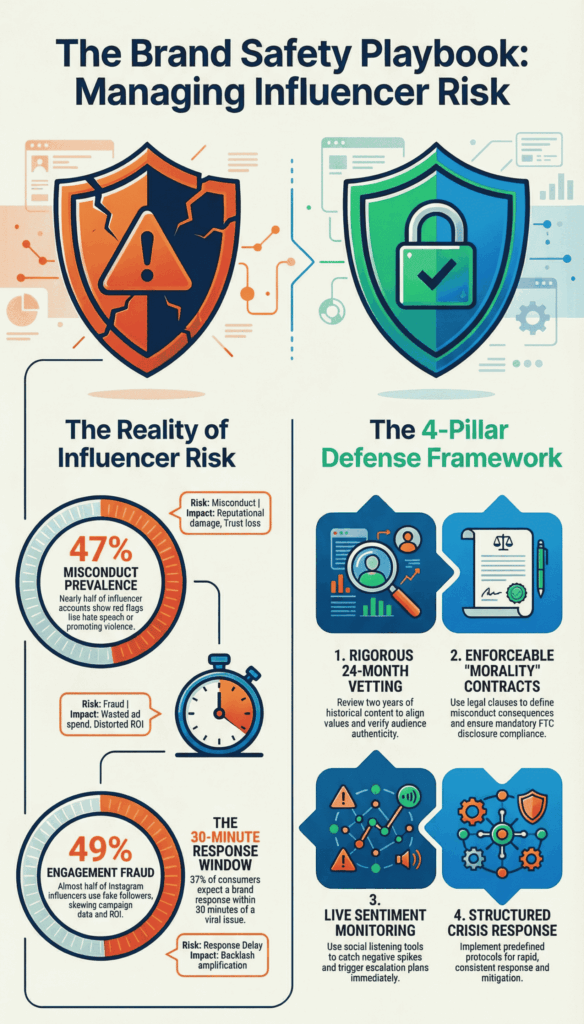
The influencer marketing space is now worth $24 billion. That scale brings bigger problems. Recent data shows 47% of influencers trigger red flags for potential misconduct.
These aren’t minor issues; they include failures in hate speech screenings and posts that risk promoting violence.
As highlighted by Alex of Arabia
“Two weeks is inexcusable. It harms the brand, and in the eyes of consumers it makes companies look negligent at best, complicit at worst. There’s two words all communicators need to know – brand safety.” –Alex of Arabia
Alongside reputation, there’s a massive fraud problem. Studies find that 49% of Instagram influencers use some form of follower or engagement fraud. This fake activity skews your campaign data and makes a mockery of ROI calculations. Any vetting process that ignores fraud prevention is incomplete.
The clock is ticking faster
When a problem goes public, your response time is critical. Research from Sprout Social notes that 37% of consumers expect a brand to respond on social media within 30 minutes of an issue blowing up. If you’re slow, the backlash only gets worse.
A framework for defense
You can’t prevent every possible crisis, but utilizing a comprehensive influencer brand safety guide drastically reduces the odds of a scandal and helps contain potential damage.
- Vetting and selection. Go beyond follower counts. Use tools to scan an influencer’s historical content for red flags and verify their audience authenticity.
- The contract is your safety net. Your legal agreement must clearly outline content guidelines, disclosure rules, and the consequences for breaching them.
- Monitor in real time. Don’t just launch a campaign and walk away. Use listening tools to track sentiment and catch negative spikes as they happen.
- Have an escalation plan. Decide in advance who gets notified, what the response steps are, and who has the authority to pause a partnership.
Building these controls isn’t about distrust. It’s the responsible way to safeguard your investment and your brand’s name in a high-reward, high-risk environment.
The table below summarizes key risk categories and documented statistics.
Influencer Risk Overview Table
| Risk Type | Statistic | Operational Impact |
| Misconduct | 47% of influencers flagged | Reputational damage and trust loss |
| Fraud | 49% buy followers or engagement | Wasted ad spend and distorted ROI |
| Vetting Gaps | 50%+ vet under 30 minutes | Association with scandals |
| Response Delay | 37% expect <30 minute reply | Backlash amplification |
These data points highlight why influencer crisis detection must be proactive rather than reactive. Without structure, minor issues escalate quickly.
How to Build a Reliable Influencer Vetting Process
A solid vetting process needs four parts: checking for fake followers, screening for shared values, reviewing past controversies, and defining what risks you’re willing to take.
It’s common for marketers to rush this, often finishing in under half an hour. But surveys tell a different story,over 96% of marketers say they want a formal, documented vetting process. That gap between desire and action is where most problems start.
The four core checks
- Follower authenticity. Look at the engagement rate compared to the follower count. Sudden spikes in followers or patterns that suggest bot activity are major red flags. Specialized tools can benchmark an account against platform averages; a low engagement rate usually means the audience isn’t real.
- Value alignment. This isn’t a quick scroll. You need to review 12 to 24 months of an influencer’s content. Check for any posts flagged for intolerance, adult material, or misinformation. Also, look at who their audience actually is. A consistent pattern matters more than one questionable post from two years ago.
- Controversy history. Search for archived posts, news about previous brand partnerships ending badly, or any recurring misconduct flags. A one-time mistake might be manageable, but a pattern of issues is a long-term threat.
- Defined risk appetite. Before you approve anyone, your team must agree on what’s off-limits. What topics, behaviors, or associations are automatic deal-breakers? Writing these parameters down removes guesswork during selection.
This structured approach turns vetting from a rushed intuition check into a defendable business process. It’s how you find partners who are both effective and safe.
Before implementing exclusions, define what aligns with your documented brand positioning and ethical standards.
- Hard exclusion categories such as hate speech, violence, and explicit adult content.
- Soft exclusion topics such as political commentary or satire.
- Scorecard based approval systems tied to documented thresholds.
At BrandJet, we document every vetting decision. Documentation supports accountability and legal team consultation if escalation becomes necessary.
What an Influencer Brand Guidelines Contract Must Include
A good contract protects everyone. It must clearly lay out four things: how disclosures work, what a “morality clause” means, the boundaries for content, and the schedule for payment.
Think of the contract as turning spoken promises into rules you can actually enforce. If it’s not written down, you’re asking for trouble. When a dispute happens, vague agreements about disclosure rules or who owns the content will only make things worse.
What to lock down in writing
- Disclosure rules. Spell out exactly how and when the influencer must disclose the partnership (e.g., #ad, #sponsored). No room for interpretation.
- The morality clause. Define what forms a breach of conduct, like hate speech or illegal activity,and what happens if it occurs (e.g., termination, fee forfeiture).
- Content boundaries. Be specific about what the creator can and cannot say, show, or promote. List any off-limit topics, competitors, or visual styles.
- Payment milestones. Link payments to clear deliverables. For example, 50% upon signed contract, 50% upon approved final post. This ensures work is completed before full payment.
A tight contract isn’t about mistrust. It’s the foundation for a professional partnership where both sides know exactly what is expected and what happens if things go off track.
The following table outlines essential contract components and their risk mitigation function.
Brand Safety Contract Structure
| Clause Type | Purpose | Risk Prevented |
| FTC Disclosure Compliance | Enforce clear #ad tagging | Regulatory fines |
| Morality Clauses Agreement | Define misconduct consequences | Brand reputation harm |
| Content Approval Protocol | Require pre post review | Off brand messaging |
| Payment Milestone Clauses | Tie compensation to compliance | Financial exposure |
| Intellectual Property Terms | Clarify usage ownership | Legal disputes |
Contracts should also define platform specific rules for Instagram, TikTok, and YouTube. AI content detection safeguards address synthetic or manipulated content risks. Campaign pause procedure language ensures immediate action authority.
Before activating any partnership, confirm the following operational elements are documented and reviewed internally.
- Legal team consultation trigger language.
- Clear escalation workflow references.
- Defined content approval timelines.
- Documentation retention requirements.
The American Bar Association emphasizes clarity in morality clauses and enforcement standards in partnership agreements. Clear contracts reduce confusion during crisis escalation workflows.
Influencer Crisis Escalation Workflow: Step by Step Framework
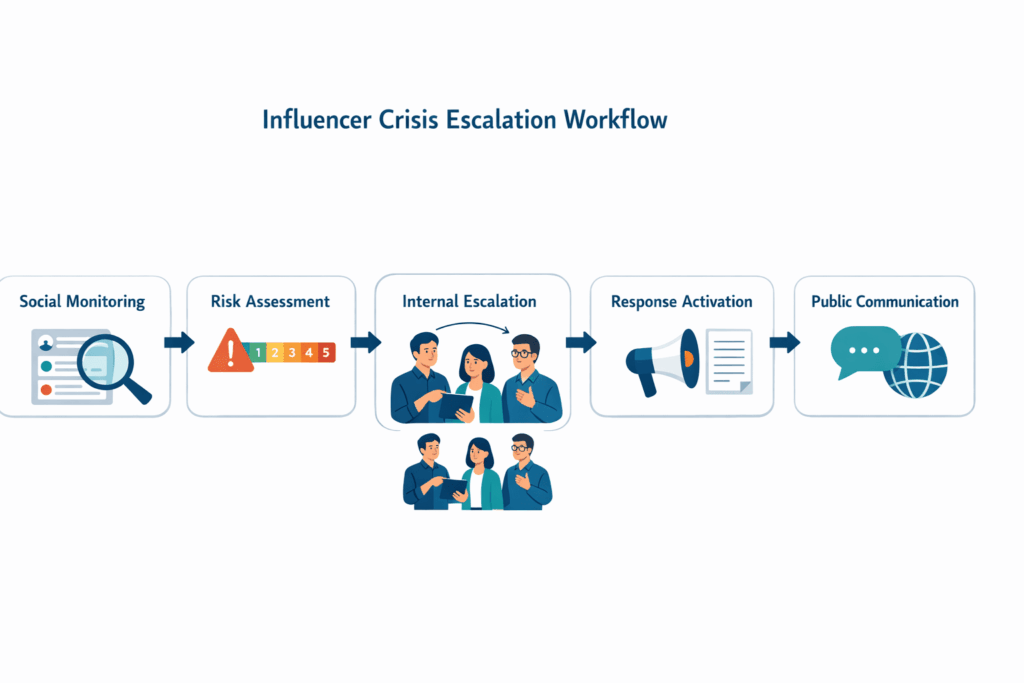
An effective influencer crisis escalation workflow includes preparation, detection, immediate action, structured response, and recovery evaluation.
Preparation begins before campaigns launch. Brands should establish an emergency response team including PR, legal, and executive leadership. Scenario planning drills test communication tree structure efficiency and decision timelines.
Insights from PRCA Asia Pacific indicate
“Prevention is key when it comes to influencer crises. By proactively addressing potential issues and maintaining effective communication with influencers, brands can minimize the impact of crises and protect their reputation.” – PRCA Asia Pacific
Detection integrates cross platform monitoring and sentiment analysis alerts. Social media monitoring tools track brand mentions and trigger word monitoring. Automated dashboards flag negative sentiment spikes and influencer misconduct flags.
By identifying these triggers early, teams can activate a pre-approved influencer crisis escalation workflow to ensure that communication remains consistent and controlled during the critical first hour of an incident.
Immediate action typically occurs within 0 to 48 hours. Campaign pause procedures stop amplification. A fact gathering timeline verifies details.
Legal team consultation ensures regulatory compliance before public communication, reinforcing structured crisis management response frameworks that prevent escalation.
The response stage requires multi channel communication. Social posts, website updates, email notices, and spokesperson briefings must remain consistent. A PR response template supports message clarity.
Before implementing communication externally, confirm the following response controls are active and aligned internally.
- Acknowledgment statement draft approved by leadership.
- Defined spokesperson responsibilities.
- Platform specific messaging adjustments.
- Monitoring of audience feedback after publication.
Recovery includes post crisis review metrics and ROI impact evaluation. Trust rebuilding tactics may involve value aligned partnerships and ethical content promotion.
A well known example is KFC during its 2018 supply shortage. Coverage by BBC News documented how structured communication helped stabilize public sentiment. The response showed how transparency and consistency can reduce backlash.
Structured workflows prevent reactive decision making. Documentation, timing, and accountability define effective crisis management.
Measuring Post Crisis Recovery and ROI Impact
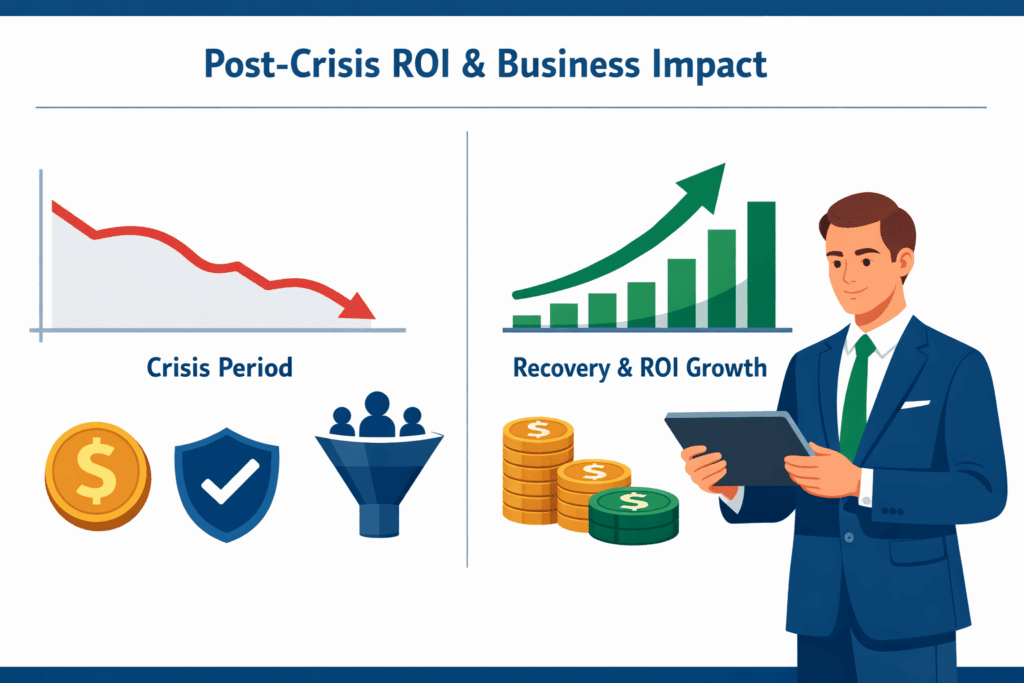
Post crisis measurement tracks sentiment recovery, engagement normalization, revenue impact, and long term brand trust metrics.
Measurement requires baseline data before campaign launch. Pre crisis sentiment scores and engagement rates provide comparison benchmarks. Without baseline documentation, ROI impact evaluation becomes unreliable.
During the crisis, monitor negative sentiment spike percentages and engagement decline. After response deployment, evaluate stabilization over 30 days. Competitor benchmark metrics may provide additional context for industry comparison.
Before analyzing recovery, confirm that the following data points are captured consistently across platforms.
- Sentiment recovery percentage over defined time periods.
- Engagement rate stabilization trends.
- Revenue variance compared to pre crisis baseline.
- Brand trust metric shifts from survey data.
With influencer marketing spending at $24 billion in 2024, financial exposure justifies rigorous measurement. Ongoing performance tracking supports campaign optimization lessons and long term risk mitigation.
FAQ
What is Influencer Crisis Detection and why does it matter?
Influencer Crisis Detection helps brands identify influencer misconduct flags, negative sentiment spikes, and reputational risk early.
It supports influencer brand safety by combining social media monitoring tools, sentiment analysis alerts, and controversy history review. When you define risk appetite and hard exclusion categories clearly, you reduce exposure. Early detection protects brand trust metrics and prevents long-term ROI impact.
How can I spot fake followers and engagement fraud early?
Start with a follower authenticity check and fake follower detection before signing any deal. Review audience demographic analysis, engagement patterns, and fraud statistics influencers often overlook.
Use ongoing performance tracking and cross-platform monitoring to catch sudden spikes. Engagement fraud prevention works best when you combine AI content detection, sentiment trend dashboards, and influencer vetting process benchmarks.
What should a crisis escalation workflow include?
A strong crisis escalation workflow outlines real-time crisis detection steps, a communication tree structure, and an emergency response team. It defines campaign pause procedure, legal team consultation timing, and a fact-gathering timeline.
Include a PR response template and acknowledgment statement draft. Clear multi-channel communication ensures fast action when influencer misconduct flags appear publicly.
How do I reduce reputational risk before launching a campaign?
Begin with value alignment screening and a full controversy history review. Conduct a reputational risk assessment that covers intolerance content flags, hate speech screening, misinformation checks, and violence post risks.
Apply content boundary guidelines and soft exclusion topics. Set content approval protocol and brand guidelines contract terms early to support ethical content promotion.
What steps help rebuild trust after an influencer crisis?
Start with transparent disclosure rule enforcement and clear FTC disclosure compliance updates. Activate a recovery strategy roadmap supported by trust rebuilding tactics and post-crisis review metrics.
Evaluate ROI impact and consumer response expectations. Strengthen intellectual property terms, payment milestone clauses, and morality clauses agreement to prevent repeat issues and restore brand trust metrics.
Influencer Crisis Detection as a Long Term Brand Protection System
One careless post can undo years of trust. The data proves the risk is real, and hope is not a strategy. The brands that endure are not lucky, they are prepared. If half of influencers face misconduct, what protects you? Not good intentions, but systems. Vetting, contracts, monitoring, response.
Without structure, you gamble reputation, revenue, and credibility every single day. Don’t wait for outrage to force action.
The cost of delay is public and permanent. With BrandJet, you build a living protection system that prevents, detects, and responds before damage spreads. Choose structure over hope, discipline over damage control, and secure the future your brand deserves.
References
- https://alexofarabia.com/2018/07/26/sondos-alqattan-and-how-brands-need-to-learn-lessons-from-this-self-made-influencer-crisis-part-2/
- https://apac.prca.global/how-to-prevent-influencer-crisis/

More posts

Prevent Internal Misinformation in Organizations
Prevent internal misinformation by establishing clear communication protocols, verification processes, and a culture...

Internal Crisis Communication: How Teams Stay Aligned
Internal crisis communication is the process organizations use to share clear, accurate information with employees...

Local Crisis Reporting Dashboard: Features and Guide
A local crisis reporting dashboard centralizes real-time incident data, fires, floods, power outages, and accidents,...