

Table of Contents
Is cold email outreach legal? Understand CAN-SPAM, GDPR, and key laws so you stay compliant and avoid costly mistakes.
Cold email outreach sits in a gray area for many teams. You are contacting someone who did not ask to hear from you, yet it remains one of the most effective lead generation channels.
The truth is simple. Cold emailing is legal in many cases, but only if you follow strict rules based on where your recipients live.
If you want to run compliant outreach without guessing, start with BrandJet AI to manage targeting, messaging, and compliance in one place.
Cold Email Legality: Quick Clarity
Here’s the short version of everything you need to stay legal and effective with cold email outreach.
- Cold email outreach is legal when you follow regional laws like CAN-SPAM, GDPR, and include clear opt-out and sender details.
- Compliance depends on who you contact (B2B vs B2C), where they are, and how you collected and use their data.
- Strong execution, clean lists, proper segmentation, and email authentication, protects deliverability and avoids legal and reputational risks.
Cold Email Legality At A Glance
Think of cold email like knocking on someone’s door. Knocking isn’t illegal. But if you barge in, ignore the “No Soliciting” sign, or lie about who you are, then you’ve got a problem.
The law looks at three big things:
- Who’s behind the door? A business office, or someone’s home?
- Where is the door? Different towns have different rules.
- How did you get the address? Did you find it publicly, or take it from a private list?
The Basic Rule for B2B
Emailing another company is like knocking on an office door. It’s expected. You just need to be professional. Say who you are immediately, make your pitch related to their job, and for heaven’s sake, tell them how to ask you to leave.
The Basic Rule for B2C
Emailing a person at home is totally different. In many places, that’s like calling their personal phone. You need their explicit permission first.
Sending a cold email to a consumer in the EU or Canada without consent isn’t just rude, it’s breaking the law.
| The Office Door (B2B) | The Front Door (B2C) |
| Generally okay if you’re polite. | Often requires an invitation. |
| Talk about their business, not their personal life. | The rules are built for personal privacy. |
| Must introduce yourself and offer a way out. | Fines are designed to hurt. |
Forget fancy legal terms. It boils down to respect. Are you being a respectful visitor, or are you being a pest?
The law is just there to define what “being a pest” looks like, and it charges you money for it.
Core Rules By Region
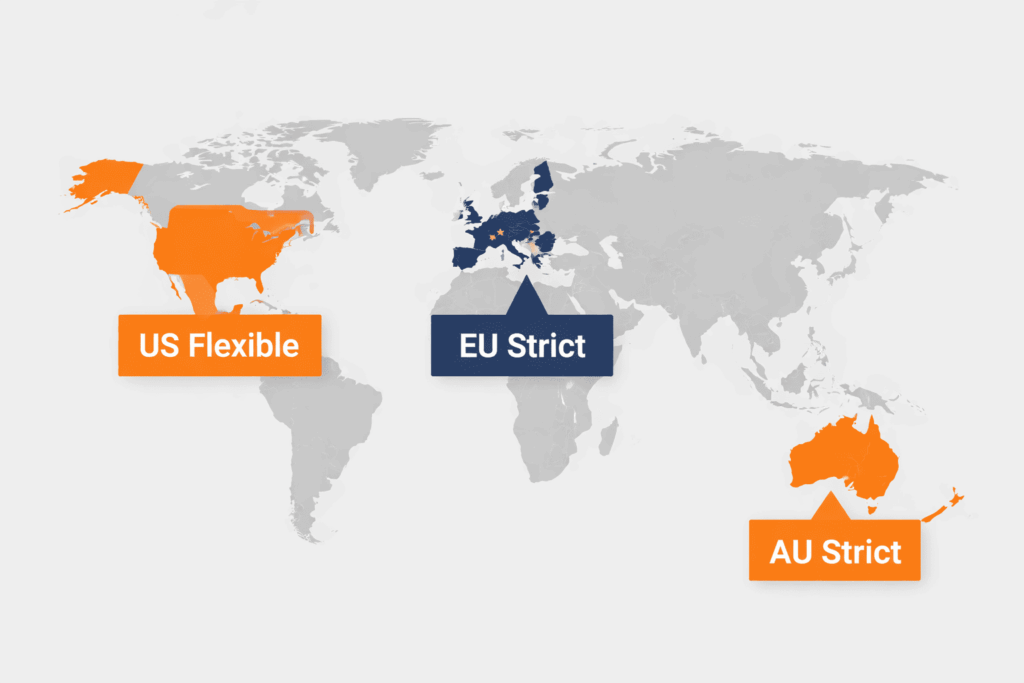
Want to send cold emails? Check the map first. Legal in Texas, illegal in Paris. Your strategy must change at the border.
| Place | Law | Main Idea | The Gist |
| USA | CAN-SPAM | Opt-Out | Email first, ask later. But tell the truth, say who you are, give an address, let people leave. |
| EU | GDPR | Opt-In | Get a yes first. Or prove you’re directly relevant to their job. Be clear. Delete data if asked. |
| UK | UK GDPR | Opt-In | Same as EU. British enforcers love checking your paperwork. |
| Australia | Spam Act | Opt-In | Ask permission. Every email needs a quit link. Say who it’s from. |
The U.S. Rule: Email Now, Complain Later
CAN-SPAM lets you send without consent, but no deception. Use honest subject lines, real sender details, a valid address, and include a one-click unsubscribe. Remove users fast.
“Each separate email that violates the CAN-SPAM Act is subject to civil penalties: $53,088 per email (2026 FTC-adjusted amount).” – Public Record Center
Europe’s Rule: Ask First
GDPR requires consent or legitimate interest. You must explain data use, respect deletion requests, and cannot blast bought lists.
The UK’s Version: Same Law, Different Cop
UK GDPR mirrors EU rules. The difference is enforcement by the Information Commissioner’s Office, with focus on transparency and records.
Australia’s Rule: Permission Only
Australia’s Spam Act requires consent. Include clear sender details and a working unsubscribe link for 30 days.
Compliance Checklist That Actually Works
Everyone talks about “best practices” until you hit send and nothing happens. The problem isn’t the rules, it’s the execution. This is the exact system we use, stripped of all the fluff.
Your List Determines Everything
Begin with real people. Scrape LinkedIn, visit company websites, or buy a targeted list from a supplier you trust.
If more than 2 out of 100 emails bounce, stop. You’re already flagged.
Internet service providers watch bounce rates like a hawk, high numbers mean automatic spam filtering, no questions asked.
Geography Isn’t Just a Detail
Sending the same email to Berlin and Boston is a legal minefield. Regulations are completely different.
Sort your spreadsheet. Use these headers:
| Contact Email | Recipient Country | Permission Level |
| sarah@tech.de | Germany | Explicit Opt-In |
| mike@startup.us | United States | Prior Business |
This separation isn’t optional. It’s your first defense against a violation notice.
Write for the “Delete” Button
Assume your reader is busy and skeptical. Your job is to be briefly, undeniably useful.
Try this template:
- Subject: An idea for [Their Company]
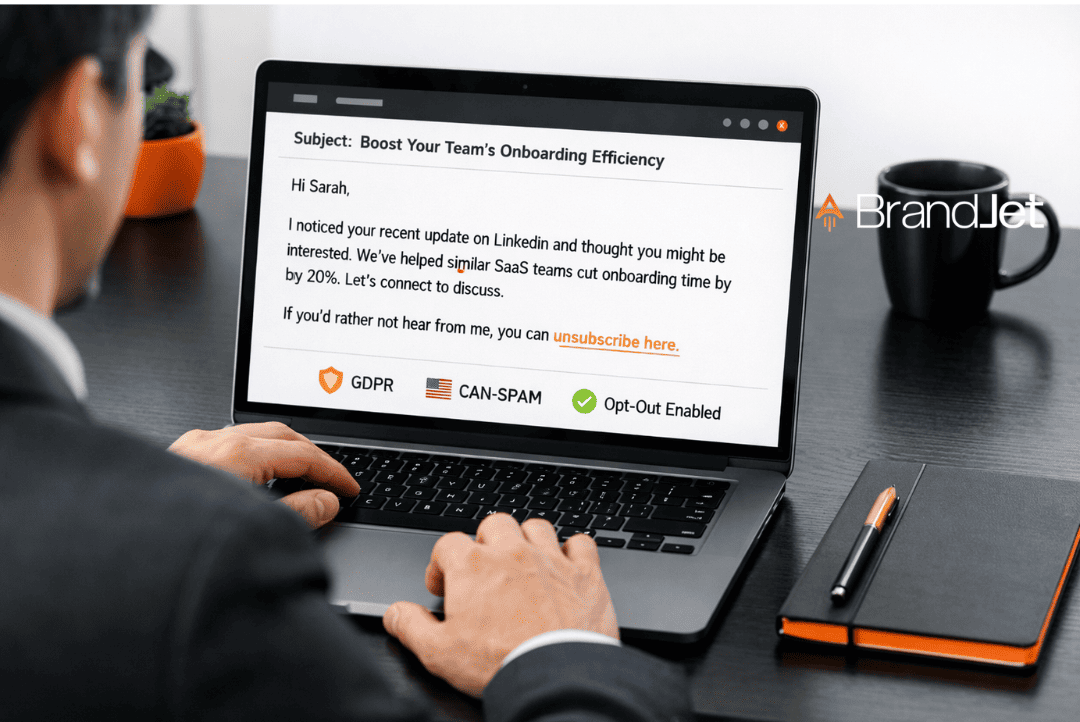
- Body: Hi [First Name], saw your update on [Specific Platform/Event]. We’ve cut onboarding time for similar SaaS teams by 18%. If this isn’t right for you, unsubscribe here.
Short. Specific. Zero pressure.
The Footer is Your Legal Shield
Forget this, and nothing else matters. Every email must show:
- Your official company name.
- A street address (a P.O. Box can work).
- An unsubscribe link that works instantly.
“The CAN-SPAM Act is a law that sets rules for commercial email…” – University of North Dakota
Authenticate or Disappear
You can have perfect copy and a pristine list, but without technical setup, your emails vanish.
Work with your IT person to add two DNS records: SPF and DKIM. These aren’t suggestions; they’re the secret handshake that tells Gmail, Outlook, and others you’re not an imposter. Without them, deliverability is a gamble you will lose.
💡Pro Tip: We once saw a campaign with perfect compliance but poor authentication. Result? 60% of emails landed in spam. Fixing SPF and DKIM doubled reply rates without changing the message.
Common Mistakes That Cause Legal Risk
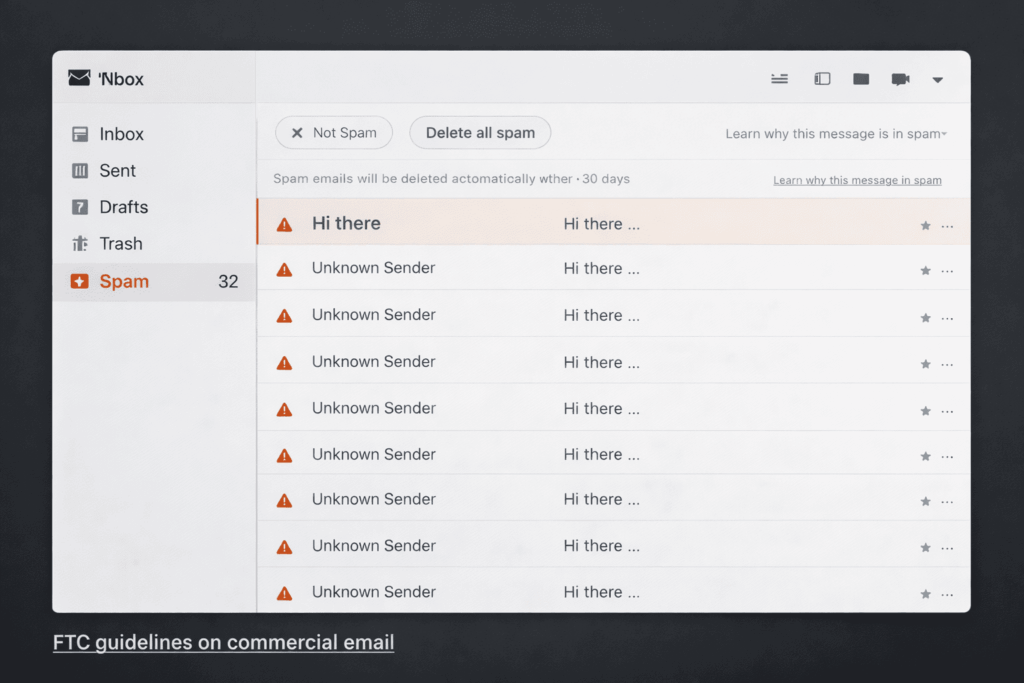
Good teams still make these mistakes. They seem minor, but the price is high.
Using “Hi There”
Emails that open with “Hi there” often fail. Spam filters block them, and people delete them. Using the person’s name, like “Hi John,” makes a difference. Your email arrives, and someone might open it.
Not Knowing Your Data Source
Where did you find that email address? Regulations like GDPR require you to have a lawful source. If you aren’t sure, you’re already in violation.
Ask yourself honestly: could you defend this source in a legal review?
Forgetting the Opt-Out Link
Every marketing email needs an unsubscribe option. Omitting it violates laws across the US, Canada, and Europe. It also destroys trust.
Automating Too Much
A barrage of follow-up emails feels aggressive.
| Good Practice | Bad Practice |
| Cap follow-ups at 3 emails. | Send 7 emails hoping for a reply. |
| Space emails over 3-5 days. | Send emails one hour apart. |
When you automate too aggressively, you push prospects away. They’ll mark you as spam, and they won’t buy.
💡Pro Tip: Treat cold outreach like a conversation, not a campaign. If it feels automated, it likely is, and recipients notice.
Cold Email Vs Spam (Quick Comparison)
Credits: Ed_Harder
It lands in an inbox without warning. But there’s a real, legal difference between a cold email and spam. Getting this wrong can ruin your campaign and hurt your reputation.
Who Gets The Email?
- Cold Email: Sent to a specific person based on role or company. Small, targeted list.
- Spam: Sent to everyone. Large, scraped or bought lists.
What Does The Email Say?
- Cold Email: Personalized. Mentions their name, work, or context.
- Spam: Generic message sent to all recipients.
Can The Recipient Say “Stop”?
- Cold Email: Includes a working unsubscribe. You remove them when asked.
- Spam: No real unsubscribe, or it does not work.
Are You Breaking The Law?
- Cold Email: Follows rules like CAN-SPAM. Clear identity and honest subject.
- Spam: Ignore laws. Uses fake details and keeps sending.
What’s The End Goal?
- Cold Email: Start a conversation or book a meeting.
- Spam: Push for instant clicks or sales.
Table: The Practical Differences
| Checkpoint | Cold Email | Spam |
| Targeting | Specific, researched | Mass, random |
| Personalization | Yes, tailored | No, generic |
| Opt-out | Functional, mandatory | Broken or absent |
| Legal compliance | Compliant | Non-compliant |
| Goal | Conversation | Immediate conversion |
The core difference isn’t technical. It’s ethical. A cold email respects the recipient’s time and choice. Spam does not. One builds a potential relationship, the other just burns a bridge.
Real Use Case From BrandJet
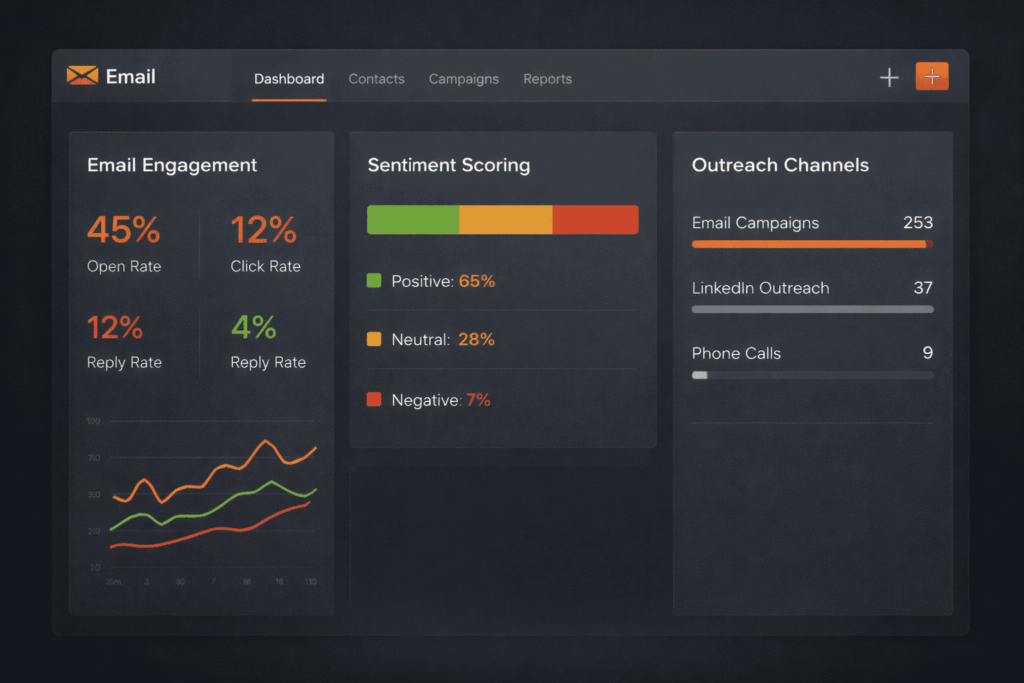
That’s the reality for sales teams right now. They’re using five different tools just to get a campaign out the door.
A tech company ditched that mess for BrandJet AI. Their approach got simple.
Stop sorting leads by hand.
BrandJet tagged every lead by country and state automatically. The first email already respected local privacy laws.
See how people really feel.
They tracked opens. They also saw if reply language was positive, negative, or neutral. It wasn’t just a number; it was a mood.
Change your message fast.
Every week, they updated email templates based on what the data said. They matched this with LinkedIn activity for the same contacts.
What happened?
Their email reply rate hit 18%. Conversations got better. They didn’t get a single legal warning from the EU, California, or elsewhere.
| Old Way | With BrandJet |
| Blast emails and hope. | Send emails, then read the room. |
| Panic about compliance audits. | Let the software handle the rules. |
| Guess which subject line worked. | Know which one resonated. |
The big shift was control. They stopped flying blind. They saw the entire outreach effect, email and social, on one screen, and could fix problems immediately.
How To Stay Safe Long-Term
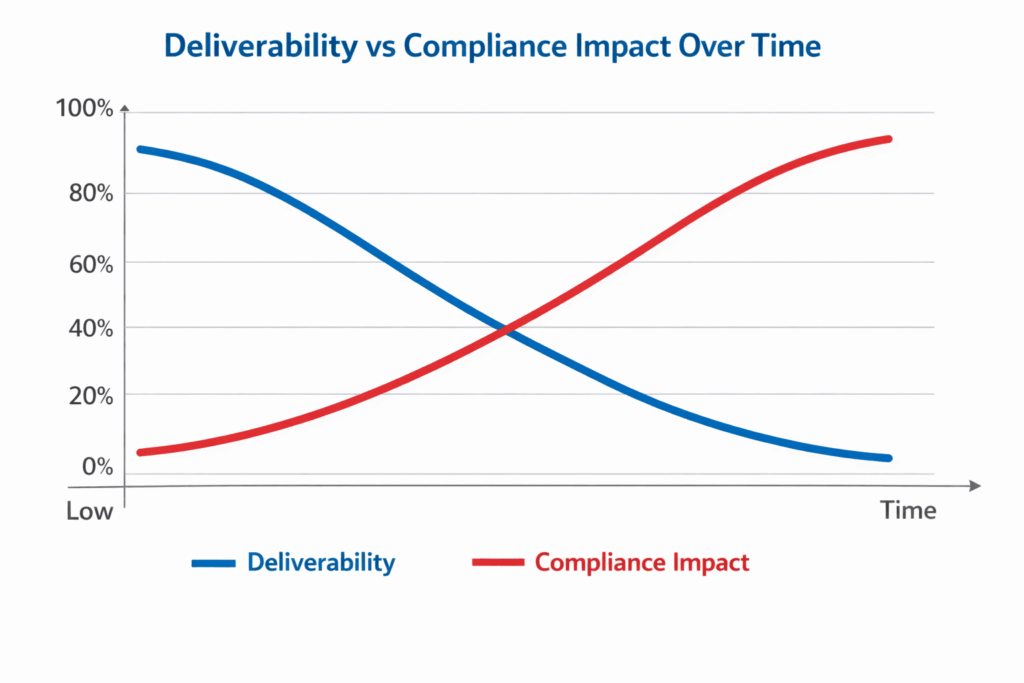
Compliance doesn’t have a finish line. The rules get updated, and your tech stack changes. Your methods have to change too.
Build a connected system, not a pile of separate apps. Your platform should verify email addresses, sync with your CRM, and manage your data agreements.
Your email reputation is critical. If it’s bad, your messages won’t get delivered. Track these specific problems:
| Problem | Outcome |
| Blacklist listing | Emails are rejected before they’re sent. |
| Spam complaints | Future emails get marked as junk. |
| Falling delivery rates | This is a symptom of a bigger issue. |
New regulations are coming. The EU AI Act, for example, will change how you can legally use customer data for automated emails. The tool you’re using now might not work under the new rules.
💡Pro Tip: Run quarterly risk assessments. It sounds formal, but even a simple review of your email campaigns can prevent major issues.
FAQ
Is cold emailing legal without consent in different countries?
Cold emailing can be legal without consent in some countries, such as under the CAN-SPAM Act in the United States, but strict rules apply. In the European Union, the General Data Protection Regulation usually requires consent or a clear legal basis.
UK GDPR and Australia’s Spam Act 2003 are stricter. You should always follow local privacy laws, data compliance rules, and email marketing regulations before starting cold outreach.
What makes a cold email compliant with privacy laws?
A compliant cold email includes accurate subject lines, a clear sender name, and a complete email signature. You must explain how you collect and use personal data in a privacy policy or privacy notice.
Include a working opt-out mechanism and honor requests promptly. Following privacy principles and maintaining data security reduces reputational damage and keeps your email outreach legally compliant.
How do I avoid spam filters and email blacklists?
To avoid spam filters and email blacklists, you need strong email deliverability practices. Set up email authentication using Sender Policy Framework and DomainKeys Identified Mail.
Use email verification and email hygiene tools to maintain a clean email list.
Write clear email content and avoid misleading claims. Consistent email engagement improves sender reputation and helps your messages reach inbox filters successfully.
Can I use automation tools for cold email outreach legally?
You can use automation tools for cold email outreach, but you must follow legal requirements.
Ensure your email campaigns include personalized messaging, a valid opt-out mechanism, and respect privacy laws.
Avoid excessive sending through sales automation. Use human oversight mechanisms and proper data processing agreements to protect personal information and maintain compliance with data regulations.
What data can I use for cold outreach without breaking rules?
You can use publicly available business data for cold outreach, but you must handle personal information responsibly.
Avoid using sensitive data such as location history or browsing behaviour without consent.
Use reliable sources like a CRM database or a B2B data supplier. Follow data compliance standards, privacy laws, and your security policy when using data for lead generation and personalized outreach.
Cold Email Legality
You send cold emails and hope for replies, but instead you worry about getting flagged or ignored.
It’s stressful when one bad list or message can hurt your domain and waste your time.
The fix is simple, treat outreach like a system, not a shortcut.
If you want an easier way to manage it all, try BrandJet.
References:
- https://www.publicrecordcenter.com/canspam.htm
- https://campus.und.edu/brand/email-templates.html

More posts

Cold Email Vs Warm Email Outreach: Strategy Guide
Cold email vs warm email outreach: compare strategies, learn when to use each, and improve lead generation, response...
Cold Email Outreach For Beginners (Simple Guide)
Cold email outreach for beginners made simple: follow clear steps, stay compliant, and improve reply rate with proven...
How Does Cold Email Outreach Work in 2026?
Learn how cold email outreach works step by step in 2026, plus tips to personalize messages, improve deliverability,...