


Table of Contents
Post-crisis recovery is the structured process of stabilizing systems, fixing root causes, and rebuilding strength after a major disruption. It starts once the immediate danger is over and continues until you’ve restored stability and resilience. This phase is where long-term outcomes are really decided, not during the initial event.
At BrandJet, we view recovery as the moment when clarity returns, allowing for informed, strategic decisions again. This article explains how recovery works in practice, what realistic timelines look like, and how organizations can build stronger systems. Keep reading to understand how to make recovery a measurable, repeatable process.
Key Takeaways
- Post-crisis recovery moves through clear phases, from stabilization to long-term rebuilding, with defined goals at each stage.
- Internal review and prevention workflows are essential to avoid repeating the same crisis conditions.
- Modern recovery depends on detection, content strategy, and perception monitoring across both human and AI-driven channels.
Crisis Recovery Timeline Examples Across Contexts
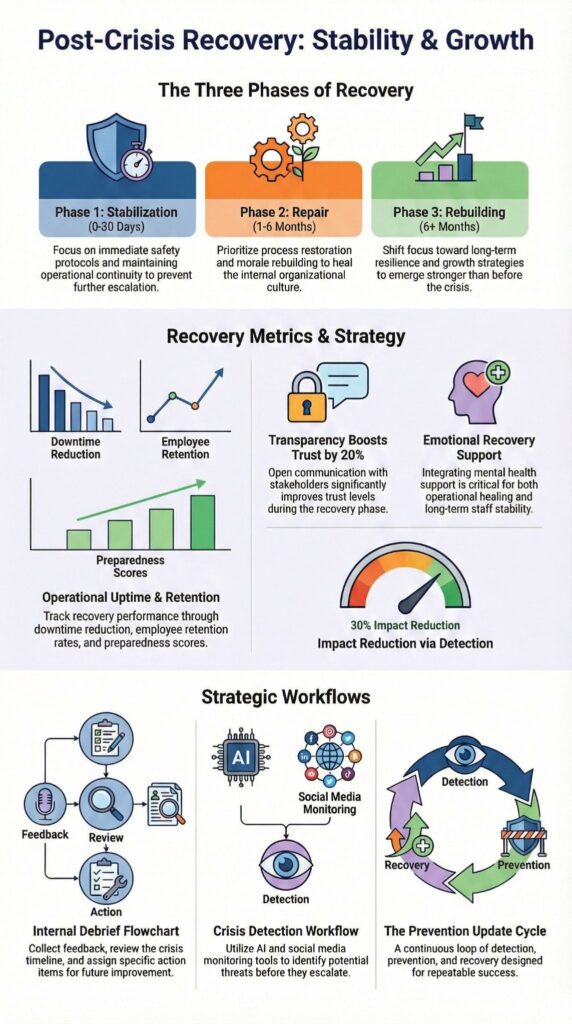
A crisis recovery timeline maps out the journey from immediate stabilization to long-term rebuilding. While the exact length varies, most recoveries follow a consistent pattern of distinct phases, supported by both academic research and operational experience.
The acute phase (roughly 0–30 days) is about containment and safety. In a health crisis, this might mean hospital stabilization. In a business, it involves urgent triage like restoring cash flow or critical services.
The intermediate phase (about 1–6 months) focuses on repair and adjustment. Teams reassess broken processes, individuals start therapy or new routines, and systems begin to regain predictability. The long-term phase (beyond 6 months) is for building resilience and growth.
Key points about recovery timelines:
- They are not linear: Setbacks are common, especially if root causes aren’t fully addressed.
- They require tracking: Leaders make timelines actionable by monitoring specific indicators like operational uptime, employee retention, or symptom frequency.
- Context matters: A business disruption, personal health crisis, and community disaster will each have a different duration and focus for each phase.
Understanding this phased structure helps set realistic expectations and measure progress, turning a vague “recovery” into a manageable process.
Post-Crisis Internal Debrief and Root Cause Review

A post-crisis internal debrief is a structured review to document exactly what happened, why it happened, and how your systems responded. It should happen once things are stable but before people’s memories start to fade.
At BrandJet, we see the debrief as a critical signal-gathering exercise. It combines internal feedback from your teams with external data on how the crisis was perceived across news, social media, and even AI-generated summaries. As noted :
“While thoughtful apologies are essential, tangible, visible actions speak far louder and resonate deeper with stakeholders. Words alone, no matter how well-crafted, are insufficient to repair a damaged reputation.” – Reputation X [1]
This process turns raw experience into usable institutional knowledge, which is the core of good crisis aftermath management. Without it, organizations are likely to repeat the same mistakes.
What a strong debrief should cover:
- A detailed timeline of events and key decision points.
- An analysis of communication gaps and escalation failures.
- A clear record of what actually worked well under pressure.
This process turns raw experience into usable institutional knowledge, which is the core of good crisis aftermath management. Without it, organizations are likely to repeat the same mistakes.
Improving Prevention Workflows After a Crisis
Improving prevention workflows after a crisis means turning the hard lessons you learned into concrete operational safeguards. This step directly determines how resilient you’ll be the next time a problem hits.
These updates typically involve revising escalation rules, clarifying who owns what, and enhancing your monitoring systems. However, a purely technical fix is rarely enough. According to research :
“Infrastructure may survive a disaster, but how will constituents fare? Resilience plans that don’t accommodate human needs will fail.” – IBM Institute for Business Value [2]
Key areas for prevention improvements:
- Operational thresholds: Update escalation triggers and recovery objectives (like RTO/RPO).
- Ownership and process: Clarify decision rights and streamline approval pathways.
- Enhanced monitoring: Improve systems for detecting early risk signals and public sentiment.
From our perspective at BrandJet, modern prevention must also include perception management. Your brand is now judged by AI systems that summarize reputation at scale, not just by people.
By integrating the insights from your recovery phase directly into your detection and response workflows, you can reduce both the time and severity of future incidents. In the end, prevention isn’t a separate phase, it’s the measurable outcome of a recovery done right.
Crisis Recovery Content Strategy and Messaging Control

A crisis recovery content strategy controls how information is shared as you rebuild. Its goal is to maintain consistency, accuracy, and trust when your audience is looking for reassurance.
Your messaging should acknowledge the impact, clearly explain the corrective actions you’re taking, and outline the next steps. It must avoid speculation and any claims you can’t support.
Key principles for recovery messaging:
- Acknowledge impact: Recognize how stakeholders were affected.
- Explain actions: Detail the concrete steps being taken to fix the problem and prevent recurrence.
- Outline next steps: Provide a clear, factual roadmap for what happens now.
At BrandJet, we emphasize that this content must also be written for AI. Large language models often become reference points for future stakeholders, investors, and customers. Inconsistent or poorly structured narratives increase long-term reputational risk.
A defined content strategy ensures your recovery messaging helps stabilize the situation, rather than creating new confusion or reopening old wounds. It makes your communication a tool for rebuilding, not a source of further uncertainty.
Crisis Detection Workflow Setup for Ongoing Recovery
Credits : NowMedia TV
Crisis detection workflows are a critical part of ongoing recovery. They act as a feedback loop, spotting early warning signals before a problem escalates again. Modern detection means monitoring social platforms, news, and even how AI models describe your brand.
These workflows define what signals to watch for, what thresholds trigger a response, and who owns that response.
Key elements of an effective workflow:
- Defined signals and thresholds: Know what to look for and when to act.
- Assigned response owners: Ensure someone is responsible for each alert.
- Perception tracking: Monitor both public sentiment and AI-generated narratives.
Recovery works best with clear stages and roles. It typically unfolds in three phases:
| Recovery Stage | Timeframe | Primary Focus |
| Stabilization | 0–30 days | Safety and operational continuity. |
| Repair | 1–6 months | Restoring processes, systems, and team morale. |
| Rebuilding | 6+ months | Building long-term resilience and growth. |
Key responsibilities by stage:
- In Stabilization, leadership provides direction and secures resources.
- In Repair, managers facilitate process reviews and support morale.
- In Rebuilding, executives embed new policies and measure resilience.
Each stage needs different resources. A common mistake is trying to tackle long-term rebuilding during stabilization, which just slows everything down.
FAQ
How long does post crisis recovery usually take for most people or teams?
Post crisis recovery does not follow a fixed timeline. The recovery timeline crisis depends on the type of event, the severity of impact, and available personal or organizational resources.
Some individuals or teams see improvement within weeks, while others require several months. Post crisis fatigue and ongoing post crisis symptoms can slow progress. Tracking measurable milestones and adjusting crisis recovery strategies help set realistic expectations.
What should be included in a practical crisis recovery plan?
A practical crisis recovery plan should address emotional, physical, and operational needs. It must include defined crisis recovery stages, mental health crisis recovery support, and financial crisis recovery actions.
The plan should outline recovery phases post crisis, assign responsibilities, and include monitoring tools. Planning for post crisis stress and structured post crisis routines reduces disruption and supports consistent rebuilding after crisis.
How can I manage emotional recovery crisis and anxiety after a major event?
Emotional recovery crisis often involves post crisis anxiety, low mood, and emotional instability. Emotional healing crisis improves through structured post crisis therapy, evidence based crisis recovery exercises, and regular emotional check ins.
Crisis recovery techniques such as grounding, breathing, and scheduled rest help regulate stress responses. Monitoring post crisis mental health and accessing crisis recovery support early reduces the risk of long term emotional disruption.
What helps with business crisis recovery and rebuilding after crisis?
Business crisis recovery requires structured assessment and clear prioritization. Leaders should begin with crisis aftermath management, financial review, and transparent stakeholder communication.
Establish short term recovery milestones using a crisis recovery framework. Focus on post crisis rebuilding, workforce stability, and crisis resilience building. Applying crisis recovery advice and a recovery mindset crisis approach supports decision making and reduces operational uncertainty.
How do I deal with post crisis fatigue and burnout during recovery?
Post crisis fatigue often results from prolonged psychological and physical stress. Recovery from burnout crisis requires deliberate rest, workload control, and gradual re engagement with responsibilities.
Post crisis self care, consistent sleep, nutrition, and low intensity crisis recovery practices support mental recovery crisis. Persistent post crisis symptoms or post crisis depression should be addressed with professional support. Structured post crisis routines reduce relapse risk.
Post-Crisis Recovery and Long-Term Stability
Post-crisis recovery is where future strength is built. It turns disruption into structured improvement. With clear timelines, internal reviews, and updated prevention, you reduce future crisis frequency and severity.
At BrandJet, we see recovery as an ongoing system requiring visibility and alignment across teams. To manage recovery with clarity across both human and AI-driven conversations, learn how BrandJet supports structured resilience.
References
- https://blog.reputationx.com/rebuild-reputation-after-crisis
- https://www.ibm.com/thought-leadership/institute-business-value/en-us/report/crisis-resilience-case-studies

More posts

Prevent Internal Misinformation in Organizations
Prevent internal misinformation by establishing clear communication protocols, verification processes, and a culture...

Internal Crisis Communication: How Teams Stay Aligned
Internal crisis communication is the process organizations use to share clear, accurate information with employees...

Influencer Crisis Detection for Modern Brands
An influencer crisis can cost you trust and revenue. It’s about spotting the danger signs before they blow up. The...