


Table of Contents
Prevent influencer brand damage starts long before any post goes live. We stop problems early instead of reacting after something goes wrong. We build a system that works every day. That system uses careful creator vetting, clear contracts, and real-time monitoring. It protects our brand before mistakes reach the public.
We have all seen brands hurt by old tweets or careless captions. When trust breaks, it falls fast. We feel the impact immediately. That is why our defense must go deeper. Planning ahead is not optional. Keep reading as we build this protection system step by step.
Key Takeaways
- We vet creators beyond surface metrics. We review historical content, audience authenticity, and value alignment before any partnership begins.
- We formalize protection through contracts. Clear policies and crisis clauses define expectations and actions before problems appear.
- We monitor partnerships in real time. Ongoing sentiment tracking helps us detect risk early and respond with control.
The High Stakes Of Getting It Wrong

Influencer partnerships amplify trust fast. They also amplify mistakes fast. When a creator posts something that conflicts with our brand values, the reaction does not stay contained. Audiences respond emotionally. Screenshots circulate.
Commentary spreads into news coverage. And our brand name follows the story whether we intended it or not. This is why teams must be able to monitor influencer-related crises as they form, not after narratives harden. By the time backlash becomes obvious, options are already limited and recovery costs rise sharply.
This risk is not hypothetical. According to Edelman’s Trust Barometer, 71 percent of consumers say they will stop buying from a brand if they lose trust in it, even temporarily [1]. Once that trust breaks, recovery is slow and uncertain.
Traditional vetting fails because it treats influencers as static profiles. It looks at follower counts and recent posts. That snapshot approach ignores how creators evolve and how standards change. Content that felt acceptable years ago may now carry risk. Audience behavior shifts too. What once felt harmless can trigger backlash today.
We cannot rely on one time checks. Influencers are living entities with long digital histories. Preventing influencer brand damage requires continuous evaluation of alignment, tone, and audience response. Reach matters less than resonance. And resonance always carries risk if we fail to manage it.
Phase 1 AI Driven Vetting and Audience Verification

This phase sets the foundation. Our goal here is simple. Identify risk before money changes hands. We begin with historical content analysis. That means reviewing years of posts, not just recent highlights. We look for repeated patterns, not isolated mistakes. Language choices, recurring themes, and prior controversies all matter.
We also evaluate audience authenticity. Large follower counts can hide hollow engagement. We analyze interaction quality, not just volume. Real audiences comment with context. They respond consistently. Bots do not.
This work requires structured tools. Manual checks miss scale and patterns. AI driven analysis helps surface issues that humans overlook. But tools alone are not enough. Judgment still matters. We assess whether a creator’s values, lifestyle, and storytelling genuinely fit our brand.
Before listing the checks we use, it is important to note that vetting is not about perfection. It is about predictability and alignment.
- Audience authenticity checks. We compare engagement rates to follower counts, review comment quality, and assess demographic alignment with our target customers.
- Historical content review. We scan for recurring controversial topics, harmful language, or positions that conflict with our values.
- Contextual fit assessment. We evaluate whether the creator’s voice and community match our brand’s tone and expectations.
We also review recent behavior carefully. The last thirty days often reveal discipline or risk more clearly than older content. FTC disclosure habits matter. When there is a connection between an endorser and the marketer that consumers would not expect, that connection should be disclosed [2]. So does competitor mention behavior.
Phase 2 Contracting for Predictable Outcomes

Contracts are not formalities. They are operational tools. If we want to prevent influencer brand damage, expectations must be explicit. Verbal alignment fades under pressure. Written terms hold.
Our contracts start with clear social media policies. These define tone boundaries, restricted topics, and disclosure requirements. We do not assume shared understanding. We document it.
Crisis clauses follow. These clauses define what constitutes a breach and what actions follow. Termination rights matter. So does the ability to pause content quickly. The goal is not punishment. The goal is speed and clarity when issues arise.
We also require content approval workflows. Sponsored content does not go live without review. This step prevents avoidable misalignment and ensures accuracy.
Before listing the core contract elements, one point matters. Contracts reduce chaos only if teams are prepared to use them.
- Defined social media policies. Clear guidance on acceptable topics, tone, and disclosure practices.
- Crisis and morality clauses. Pre agreed triggers and response steps that enable fast action.
- Content review requirements. Mandatory approval before publication for sponsored posts.
Contracts do not eliminate risk. They make responses predictable. That predictability protects reputation.
Phase 3 Real Time Monitoring and Social Listening
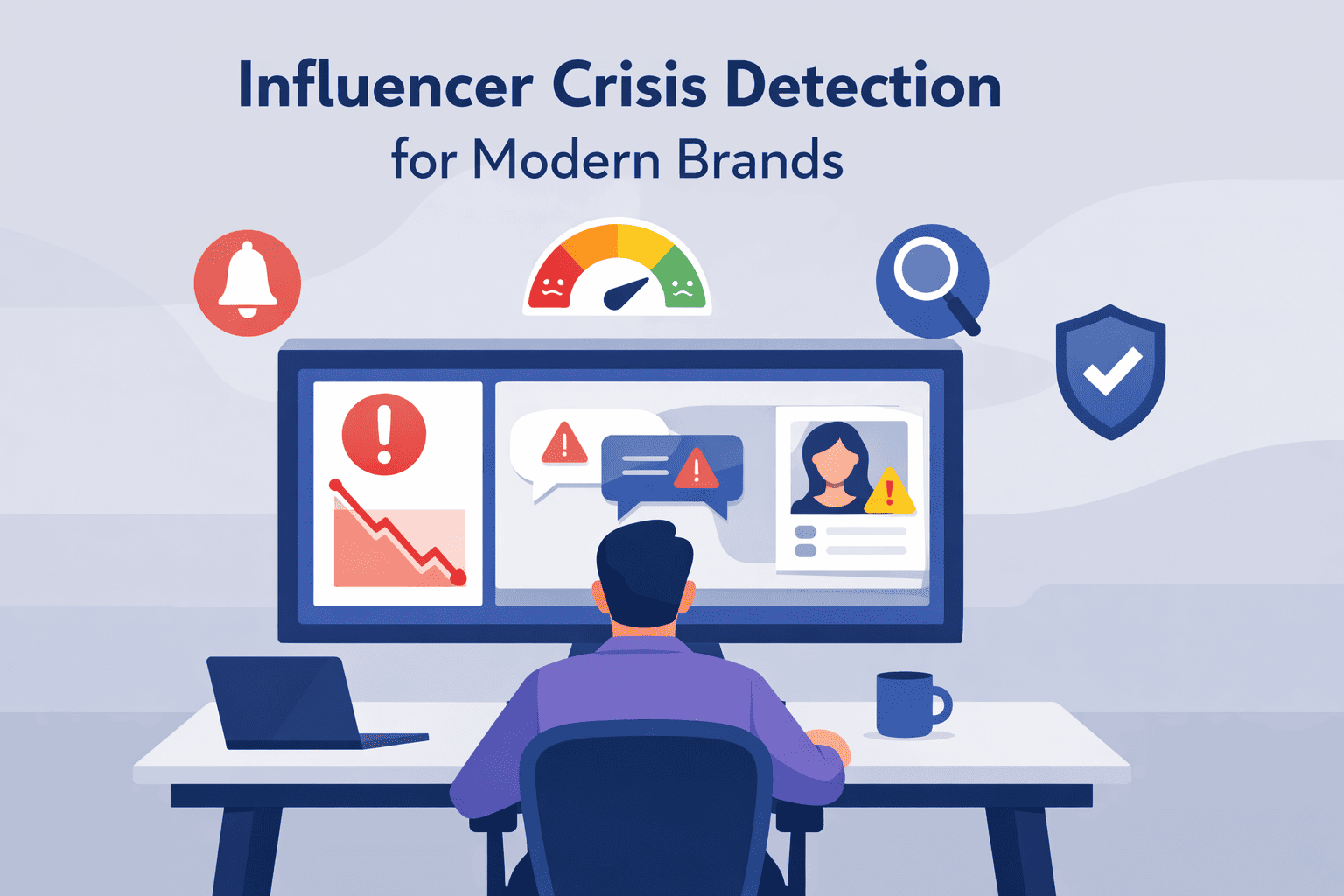
Once campaigns are live, our responsibility shifts. Vetting and contracts create structure. Monitoring provides awareness. Without it, we are blind. This is why influencer activity tracking becomes a core operational function, not a reporting afterthought.
We track sentiment in real time across social platforms and news coverage. We monitor influencer mentions alongside brand mentions. Spikes in negative language matter. Keyword changes matter. Hashtag associations matter.
Alerts must reach the right people fast. We define internal escalation paths in advance. Marketing, legal, and communications teams know their roles. No scrambling. No delays.
Scenario planning supports this work. We prepare response frameworks for different levels of risk. Minor complaints require different handling than coordinated backlash.
Before outlining monitoring components, one reminder is necessary. Monitoring is only useful if teams trust and act on the signals.
- Real time sentiment alerts. Automated detection of negative shifts tied to influencers or campaigns.
- Keyword and topic tracking. Monitoring for emerging associations that signal reputational risk.
- Clear escalation workflows. Defined notification paths that reduce response time.
At BrandJet, we treat sentiment spikes like operational incidents. They require attention, context, and measured action.
A Framework For Risk Mitigation
Table Influencer Risk Mitigation Framework
| Phase | Primary Focus | Key Outcome |
| Vetting | Historical content and audience review | Reduced risk from past behavior and misalignment |
| Contracting | Clear policies and crisis clauses | Predictable actions during issues |
| Monitoring | Real-time sentiment and mention tracking | Early detection of emerging risks |
| Diversification | Multiple creator partnerships | Lower single-point failure exposure |
Seeing influencer risk as a connected framework helps us stay organized. Each phase has one main purpose. Vetting reduces surprises. Contracting defines boundaries and processes. Monitoring catches early signals. Diversification reduces dependence.
We keep that simple structure in mind when we plan or adjust our strategy, because it helps us see where a weak point might exist and where we need more investment.
Before we restate this framework in a structured way, we remind ourselves that all four parts support each other. Removing one often places excess pressure on the others.
Phased Strategy For Influencer Risk Management
- Vetting uses AI powered content scans and audience verification to identify past controversies, value misalignment, and non authentic follower bases.
- Contracting uses specific morality clauses, social media guidelines, and approval workflows to create legal and operational protection.
- Monitoring uses integrated social listening, sentiment analysis, and alerting to allow quick and informed action while a campaign is active.
- Diversification uses networks of creators, including micro influencers, to spread reputational risk and avoid overreliance on any single partnership.
Why Diversification Lowers Exposure
Relying on one large creator concentrates risk. A single misstep can affect the entire campaign. Diversification spreads exposure.
Micro influencers often serve narrower audiences with higher trust. Their smaller scale limits blast radius when issues arise. Managing more partners requires effort. But the tradeoff is resilience.
We review value alignment regularly across all partners. Brand messages evolve. Influencer alignment must evolve too.
Before listing the benefits, one clarification matters. Diversification does not remove responsibility. It redistributes it.
- Lower single point failure risk. Issues with one partner do not derail entire campaigns.
- Stronger niche credibility. Smaller communities often engage more deeply.
- Greater message stability. Multiple voices reduce dependency on one narrative.
This approach supports long term brand stability.
How We Support This Work at BrandJet
We built BrandJet to support teams managing this complexity. We saw teams juggling disconnected tools and missing signals. That gap created risk.
BrandJet provides real time brand monitoring across social platforms, news, and AI systems. We analyze sentiment continuously and also track how brands appear inside major AI models, which increasingly shape perception. These capabilities build on what teams already expect from BrandJet review monitoring features, extended to influencer and partnership risk.
Our platform centralizes alerts and reporting. Teams see risk patterns clearly. They act faster because information is unified.
Before outlining core capabilities, one principle guides our design. Insight only matters if it leads to action.
- Real time monitoring. Continuous visibility across human and algorithmic conversations.
- AI powered sentiment analysis. Context aware interpretation of tone and direction.
- Unified workflows. Centralized alerts that support fast response.
We focus on clarity. Not noise.
FAQ
How can we prevent influencer brand damage before a campaign starts?
We prevent influencer brand damage by checking creators early. We use an influencer vetting process that includes a historical content audit, fake follower detection, and audience authenticity verification. A simple brand safety checklist helps us find risks fast. This way, problems are stopped before content goes live and spreads.
What matters most when reviewing an influencer beyond follower numbers?
Follower count alone is not enough. We check engagement rate benchmarks, demographic fit evaluation, and growth spike anomalies. Bot activity detection helps spot fake engagement. We also run past controversy analysis to understand behavior over time. These steps support a better reputation risk assessment before any agreement is made.
How can brands spot warning signs of influencer scandals early?
Early warnings come from social listening tools and real-time mention tracking. We watch sentiment spike alerts, negative hashtag monitoring, and boycott sentiment tracking. These signals show when conversations shift fast. Scandal early warning helps teams act early and supports viral backlash prevention during active campaigns.
Why do contracts help prevent influencer brand damage?
Contracts set clear rules before problems happen. Partnership contract clauses cover social media policy enforcement, content approval workflow, and usage rights agreements. Disclosure requirement checks support FTC disclosure compliance. De-escalation protocols explain what to do if issues arise, reducing confusion and risk under pressure.
What should teams do when influencer issues start to escalate?
Teams need a clear plan. A crisis response playbook includes an internal comms tree, response template library, and simple scenario planning drills. Transparency communication plans guide public updates. Private outreach tactics help calm situations. These steps support engagement recovery tactics and follower loss prevention after incidents.
Prevent Influencer Brand Damage Through Ongoing Risk Management
Preventing influencer brand damage works best when risk management is continuous, not reactive. By treating vetting, contracts, and real-time monitoring as one system, we stay in control, spot issues early, and protect brand trust before small signals turn into public backlash.
This is how brands protect trust at scale. If you want to implement this approach with integrated monitoring and clear insights, you can explore how BrandJet supports proactive partnership protection.
References
- https://www.edelman.com/trust/2024/trust-barometer
- https://www.ftc.gov/business-guidance/resources/disclosures-101-social-media-influencers
Related Articles
1. https://www.brandjet.ai/blog/monitor-influencer-related-crises/
2. https://www.brandjet.ai/blog/influencer-activity-tracking/
3. https://www.brandjet.ai/blog/brandjet-review-monitoring-features/

More posts

Prevent Internal Misinformation in Organizations
Prevent internal misinformation by establishing clear communication protocols, verification processes, and a culture...

Internal Crisis Communication: How Teams Stay Aligned
Internal crisis communication is the process organizations use to share clear, accurate information with employees...
Influencer Crisis Detection for Modern Brands
An influencer crisis can cost you trust and revenue. It’s about spotting the danger signs before they blow up. The...