


Table of Contents
Prevent internal misinformation by establishing clear communication protocols, verification processes, and a culture that values accuracy across teams. When information moves quickly through email, Slack, meetings, and internal documentation, small inaccuracies can turn into rumors or operational mistakes.
Organizations that implement structured internal communication strategies, supported by leadership and reliable verification workflows, maintain trust and ensure teams act on correct data.
Preventing internal misinformation is essential for distributed teams and complex projects. Keep reading to learn practical steps and systems that help organizations safeguard accurate information flow across modern workplaces.
Misinformation Defense: Quick Wins for Teams
Stopping internal misinformation requires proactive strategies and clear leadership. These points summarize how organizations can maintain accurate, trustworthy communication during critical situations.
- Structured communication prevents misinformation. Clear protocols, verification workflows, and transparent messaging ensure employees receive correct information.
- Fact-checking and digital literacy reduce rumors. Encouraging verification and critical thinking strengthens employee trust across the organization.
- Monitoring tools safeguard narrative integrity. Technology that tracks conversations and detects shifts helps teams maintain accurate, consistent messaging.
What Is Internal Misinformation in Organizations?
Internal misinformation is inaccurate or misleading information that spreads among employees and affects decisions, trust, and workflows. It usually occurs when updates move quickly across teams without verification.
Even small gaps in knowledge can turn into misunderstandings, incomplete reporting, or operational mistakes. Outdated internal documentation, unmaintained wikis, or neglected knowledge bases are common sources. Fast-paced environments, like software development or operations teams, are particularly vulnerable.
Internal misinformation is different from miscommunication, which is usually unclear wording, and disinformation, which is intentional manipulation. Most internal misinformation arises from gaps, time pressure, or fragmented information.
Common areas where misinformation appears include:
- Internal chat platforms such as Slack or Microsoft Teams
- Meeting summaries or verbal updates
- Incident reports or operational briefings
- Shared documentation and internal knowledge bases
Organizations face challenges when speed outweighs verification. Employees often share assumptions before confirming accuracy, which can spread errors quickly. Strong internal crisis communication and clear verification processes help prevent misinformation from taking hold while keeping teams aligned and informed.
Why Does Internal Misinformation Spread So Easily?

Internal misinformation spreads fast because of informal channels, missing verification, and cognitive biases. Messaging tools like Slack or Teams make communication quick, but speed often comes at the cost of accuracy.
As highlighted by Forbes
“Communicate it first internally and widely to prevent misinformation and confusion.” – Forbes
Partial updates, long message chains, or assumptions about earlier messages can amplify errors. Rapid project cycles increase pressure to act before verifying, letting misinformation move through teams and updates.
Human behavior also plays a role. Common psychological factors include:
- Confirmation bias, favoring information that fits existing beliefs
- Authority bias, accepting leadership messages without question
- Reluctance to ask clarifying questions during meetings
Operational weaknesses make the problem worse. Multiple versions of the same information or outdated documentation create confusion. Frequent triggers include:
- Outdated internal knowledge bases
- Multiple “sources of truth” across systems
- Unverified internal announcements shared across departments
Without clear verification checkpoints, these conditions allow rumors, assumptions, and partial information to spread widely. Strong internal crisis communication, consistent knowledge management, and early fact-checking are key to preventing misinformation from taking root while keeping teams aligned.
What Communication Protocols Prevent Internal Misinformation?
Communication protocols prevent internal misinformation by creating a single source of truth and a verification process before information spreads.
Insights from SANS Institute
“Provide employees with clear guidance on what they can say, reminding them of social media policies, and explaining why consistent messaging matters.” – SANS
Without clear rules, updates pass through multiple channels, increasing the risk of distortion or missing context. Large organizations like Google use structured documentation systems to ensure teams access accurate knowledge and maintain alignment.
Foundational practices that improve accuracy include:
- Single source of truth: Centralized platforms give employees access to verified information.
- Verification before broadcasting: Announcements are confirmed by responsible owners before sharing.
- Source attribution: Updates include the origin of the information and supporting documentation.
- Update ownership: A named individual maintains the accuracy of information.
A typical workflow follows a simple sequence: information is created or reported, verified by the responsible owner, documented in the knowledge base, and then broadcast internally.
When these protocols operate consistently, employees rely on documented sources instead of informal message chains. This reduces the spread of rumors, prevents operational mistakes, and keeps teams coordinated.
Which Verification Processes Help Stop False Internal Information?

Verification workflows help stop false internal information by ensuring updates are validated before distribution. They create structured checks that confirm accuracy, reduce rumor-driven communication, and maintain trust across teams. Organizations often use layered verification rather than a single step, with each layer reviewing information from a different perspective.
Core verification methods include:
- Two-source confirmation before publishing updates
- Documentation validation against internal knowledge bases
- Manager approval for policy or operational changes
- Automated alerts for outdated or incorrect information
Different methods provide varying speed and reliability:
| Method | Speed | Reliability | Best Use Case |
| Peer confirmation | Fast | Medium | Daily team updates |
| Manager validation | Medium | High | Policy announcements |
| Documentation check | Medium | High | Technical instructions |
| Automated validation | Fast | Medium | Data system updates |
Combining these approaches creates reliable validation workflows and audit trails. When verification becomes a routine part of internal communication, employees rely on trusted sources instead of assumptions. This prevents misinformation from spreading quickly across departments and keeps teams aligned and informed during fast-moving or complex projects.
What Cultural Norms Reduce Internal Misinformation?
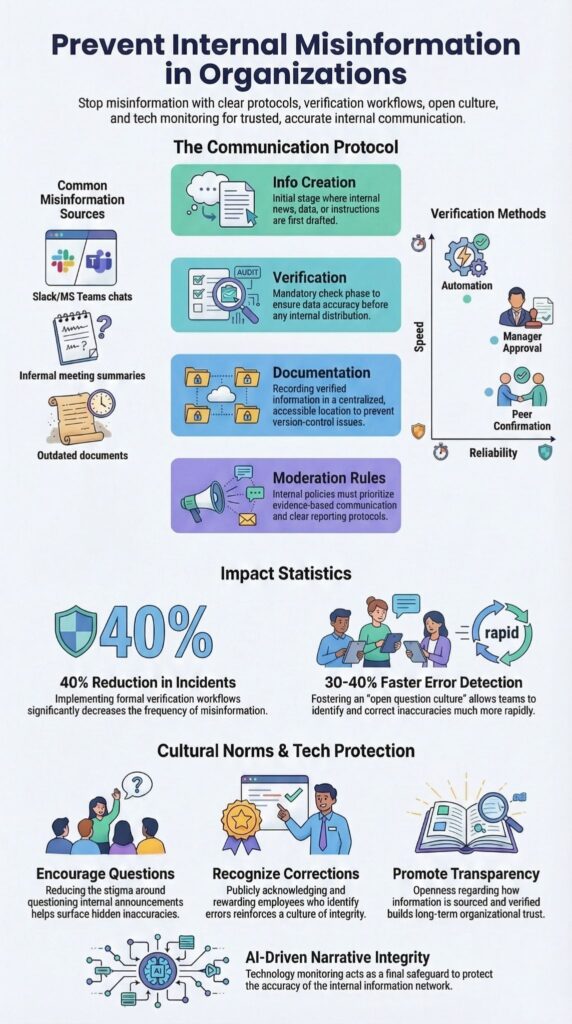
Organizational culture plays a key role in reducing internal misinformation. When employees feel safe questioning unclear information, the risk of rumors and errors drops.
In workplaces where asking for clarification is discouraged, incorrect information can circulate for long periods. Leaders who model transparency and encourage verification create an environment where employees verify facts before acting.
Several cultural norms help improve accuracy across teams:
- Encourage clarification questions during meetings
- Recognize employees who correct inaccurate information
- Normalize source checks and evidence-based communication
- Promote transparency in decision-making discussions
These norms become effective when reinforced through structured practices. Examples include:
- Weekly knowledge review sessions to revisit and update documentation
- Public correction channels within collaboration platforms
- Documentation-first communication expectations for operational updates
When organizations reward accuracy over speed, employees adopt verification habits naturally. Fact fluency, information hygiene, and collaborative verification become part of everyday work.
A culture that values clear, verified communication makes misinformation less likely to spread, ensures employees rely on trusted sources, and keeps teams aligned even during fast-moving projects or operational changes.
Moderator Rules That Actually Work (Lessons from Reddit Communities)
Credits : TED
Online communities like r/ModSupport show that precise rules help moderators enforce misinformation policies effectively. Members share information rapidly, and moderators must prevent misleading claims from spreading. Vague definitions of misinformation often lead to inconsistent enforcement and confusion.
Several lessons from these communities can guide internal communication governance. Successful moderation relies on clear expectations rather than reactive measures. Key practices include:
- Define misinformation rules precisely
- Require evidence or citations for factual claims
- Provide visible examples of enforcement
Communities often implement structured frameworks to support these rules. Examples include:
- Evidence requirements before publishing claims
- Citation policies for health or scientific topics
- Transparent removal guidelines explaining enforcement actions
Organizations can adapt these principles internally. Clear communication policies help employees understand verification standards and what counts as reliable information. Visible examples of correct practices reinforce compliance and reduce the spread of inaccurate updates.
The main takeaway is simple: rules must be specific, actionable, and consistently applied. Just as moderators prevent confusion in online communities, organizations that define clear internal communication standards reduce misinformation and help teams trust verified sources while staying aligned during fast-moving or high-pressure situations.
FAQ
How can companies prevent workplace rumors from spreading through internal communication channels?
Companies can prevent workplace rumors by strengthening internal communication and setting clear communication protocols. Employees should verify information before sharing messages and check source credibility to ensure data accuracy.
Simple verification checklists help staff confirm facts quickly. Consistent leadership messaging, active rumor control, and structured feedback loops reduce misinformation spread and protect organizational trust across teams.
What employee training helps teams recognize internal disinformation tactics early?
Effective employee training should include digital literacy, disinfo awareness, and structured fact-checking processes. Employees learn how misinformation spread begins, how bias detection works, and how to evaluate source credibility.
Regular misinformation drills and myth-busting sessions help teams practice truth validation. These exercises build strong habits that support a lasting validation culture and improve organizational trust.
How can organizations stop corporate gossip and rumor mills from damaging team alignment?
Organizations can limit corporate gossip by establishing anti-gossip policies and clear communication protocols. Leadership messaging should maintain message consistency so employees rely on verified updates.
When rumor mills appear, teams should apply rumor control measures, share evidence-based comms, and conduct rumor debunking quickly. Transparency policies and anti-rumor campaigns strengthen team alignment and reduce misinformation spread.
What systems improve information verification and prevent internal leaks or fake news internally?
Organizations should implement structured verification systems that include audit trails, source tagging, and defined vetting processes.
Collaborative verification and cross-departmental checks strengthen information verification and protect data accuracy. Internal audits also review message distribution within knowledge management systems. These processes reduce internal leaks and help organizations stop fake news internal before it spreads widely.
How do leaders maintain narrative integrity during crisis communication without hiding uncomfortable truths?
Leaders maintain narrative integrity by preparing crisis communication plans and following clear escalation procedures.
Rapid response teams should validate information through truth triage and share org-wide alerts when misinformation appears. Transparency policies ensure that leaders address problems directly with evidence-based comms. Consistent leadership messaging and accountability measures prevent trust erosion and maintain organizational trust during crises.
Keep Internal Messages Accurate and Trusted
When misinformation creeps in, it can feel impossible to keep everyone on the same page, and stress rises fast. You watch inaccurate details spread, teams act on the wrong info, and trust takes a hit. Reality check: small errors turn into big problems quickly.
BrandJet makes it easier to stay ahead. It helps you track conversations, spot early misinformation, and guide teams back to the facts before confusion spreads. Using it gives you clear visibility and control, so communication stays accurate, teams stay aligned, and leadership credibility stays intact.
References
- https://www.forbes.com/councils/forbesbusinesscouncil/2025/10/16/future-proofing-your-communications-strategy-four-tips-for-business-continuity-in-a-crisis/?utm_source=chatgpt.com
- https://www.sans.org/blog/stay-ahead-of-ransomware-communication-during-cyber-incident/
Related Articles

More posts

Internal Crisis Communication: How Teams Stay Aligned
Internal crisis communication is the process organizations use to share clear, accurate information with employees...
Influencer Crisis Detection for Modern Brands
An influencer crisis can cost you trust and revenue. It’s about spotting the danger signs before they blow up. The...

Local Crisis Reporting Dashboard: Features and Guide
A local crisis reporting dashboard centralizes real-time incident data, fires, floods, power outages, and accidents,...