


Table of Contents
AI alerts quietly catch trouble before it hits your brand dashboard.
They track small, unusual shifts in public conversation, spikes, dips, slow sentiment drifts, that usually stay hidden before a major reputation crisis, viral backlash, misinformation wave, revenue impact, or customer churn surge.
Instead of your team scrambling when a hashtag explodes at 2 a.m., they get early, clear signals while there’s still time to investigate, respond, and protect trust.
Done right, this cuts alert fatigue, filters out noisy mentions, and keeps focus on what truly matters. Keep reading to see how it works, where it fits, and how to put it to work in your social and brand monitoring stack.
Key Takeaway
- AI prevents brand crises by spotting unusual conversation behavior, not just known keywords.
- It cuts through noise so teams can focus on real reputation risks.
- The best approach combines AI’s speed with human judgment.
The Silent Signal in the Static

It’s a normal Tuesday. But in the background, an AI system notices something strange: a sudden cluster of negative brand mentions from a new region at 3 a.m. For a human, that’s lost in thousands of posts. For the AI, it’s a red flag. That’s the core of crisis prevention, seeing the signal in the static before it becomes a siren.
The system works by learning your “normal.” It studies patterns in brand mentions, sentiment, posting times, influencer engagement, and share velocity over weeks. This becomes a baseline.
Then it watches for anything that breaks that pattern. A sharp spike in “scam” claims. A short video spreading unusually fast. An influencer criticizing your brand outside their usual topic. It doesn’t just collect these signals, it scores them for reputational risk and tells you which ones matter.
- Learns Normal: Studies your typical brand conversation patterns.
- Spots Deviations: Flags anything that breaks the routine.
- Scores Risk: Uses context (reach, sentiment, speed) to prioritize real threats.
- Alerts Smartly: Sends a few high-quality warnings, not thousands of mentions.
This targeted alerting is a core strength of an AI search crisis detection system, helping teams focus on what really matters.
This directly solves alert fatigue. In typical social listening workflows, teams are overwhelmed by constant low-value mentions, complaints, sarcasm, bots, or unrelated tags. Most don’t require action.
AI acts as a filter. It handles initial triage, so humans only see alerts that show real escalation potential. The AI makes the team more effective, not obsolete.
| What AI Learns as “Normal” | Early Risk Signal (Anomaly) | Why It Matters | Recommended First Action |
| Employee logins between 8 a.m.–7 p.m. | Login from a new country at 3 a.m. | Strong indicator of account takeover or credential theft | Force MFA check, verify user identity, review session history |
| Typical file downloads under 200MB/day | 10GB file transfer at midnight | Possible data exfiltration or insider risk | Pause transfer, check access logs, validate business need |
| Access limited to role-based folders | User suddenly accessing sensitive HR/finance folders | Privilege misuse or compromised credentials | Re-check permissions, lock down sensitive folders, alert admin |
| Stable API error rate <1% | Sudden API error spike to 8–10% | Outage or integration failure developing | Roll back deploy, check dependency health, trigger incident playbook |
| Steady refund/chargeback volume | Chargeback spike alert within 24 hours | Fraud wave or payment processor issue | Review payment logs, alert finance, apply fraud rules |
How the Machine Sees What We Can’t
Credits: TechClass
AI detects reputation threats by connecting dots humans would miss. It doesn’t just analyze what was said, it looks at who said it, when, where, and how fast it spreads.
A single negative comment is nothing. But that comment, followed by similar replies, then reposted by a creator with large reach minutes later, tells a story. The AI pieces that story together instantly.
It pulls data from everywhere: social platforms, forums, review sites, news headlines, and search trends. By correlating these streams in real time, it finds hidden patterns. It’s not guessing, it’s recognizing early fingerprints of a brand crisis.
This ability to connect disparate signals powers an AI-driven brand crises detection early, letting teams act before issues spiral.
A Day in the Life of a Transformed Brand Team

Before AI, brand monitoring was reactive. A post would trend, and teams would spend hours manually searching mentions, screenshots, and context.
Now, AI handles the first leg of that investigation. It gathers relevant posts, identifies the origin, tracks amplification paths, and assigns a priority level.
This isn’t theoretical. Many organizations now use AI for alert triage in social listening. The result? Teams stop scrolling and start solving.
They focus on issues that require human judgment, tone, accountability, legal risk, and messaging. Capacity grows without adding headcount. The team moves from constant reaction to controlled prevention.
Crises Come in Many Forms

This technology goes beyond cybersecurity. It’s an early-warning system for brand trust.
- Reputation Risk: Detects negative narratives before they go viral.
- Misinformation: Flags false claims, manipulated clips, or rumor clusters early.
- Customer Issues: Identifies complaint patterns before they trigger mass backlash [1].
When a high-confidence alert fires, it can trigger an automated playbook, alerting comms leads, opening an incident ticket, or preparing briefing summaries. Automation buys the most valuable resource: time.
Why the Human Can’t Leave the Room

AI is powerful, but it doesn’t replace people. Its role is speed and scale, processing millions of posts to surface the handful that matter.
The human role is judgment: understanding context, ethics, brand values, and making the final call during a crisis [2].
This human-in-the-loop model is essential. AI can miss sarcasm, cultural nuance, or coordinated trolling. Human oversight ensures the response protects trust and avoids overreaction.
Building Your Own Early Warning Post
Start by identifying your biggest risk: influencer backlash, misinformation, product complaints, or executive controversies.
Feed your AI clean, relevant data—its insights are only as good as its inputs. Then define escalation rules. Decide which alerts trigger automation and which always require human approval.
The goal is to turn every quiet Tuesday into a confident one.
Ask one question: what shift in public conversation would tell us a crisis is coming tomorrow?
Implementing an AI search crisis response playbook helps automate these workflows and ensure consistent action.
FAQ
What is an AI early warning system for crisis prevention with AI alerts?
It’s a system that learns normal brand conversation patterns and detects abnormal shifts, spikes in negative sentiment, sudden rumor clusters, or unusual viral spread.
These alerts surface early risk signals so teams can respond before issues escalate into full reputation crises.
How do anomaly detection alerts reduce alert fatigue without missing real threats?
Instead of relying on keywords alone, anomaly detection evaluates context, speed, reach, and sentiment.
It groups related posts, suppresses noise, and escalates only high-confidence risks, reducing false positives while protecting against real threats.
Can crisis prevention with AI alerts detect reputation risks before they go viral?
Yes. By combining social listening, sentiment analysis, and trend detection, AI identifies early signals such as influencer backlash, misinformation spread, and sudden narrative shifts, giving PR teams time to act.
What actions should automation trigger when an AI alert signals a real crisis?
Automation can notify stakeholders, open incident tickets, assemble evidence threads, and prepare briefing summaries.
Public statements, takedowns, or legal escalation should always require human approval.
Which risks can AI alerts detect outside cybersecurity?
AI can detect viral complaint waves, misinformation campaigns, boycott calls, product issue narratives, and negative news amplification, anything that threatens brand trust and revenue.
Your Head Start Starts Here
AI alerts turn crisis prevention into a brand advantage. By learning what “normal” looks like, they detect subtle anomalies early, reduce alert fatigue, and surface only the risks that matter.
The strongest system isn’t fully automated—it’s partnered. AI provides speed and pattern detection; humans provide context and accountability.
Build around your highest-risk signals, connect clean data sources, and automate carefully. Evaluate platforms based on your social stack and response needs, including BrandJet.
References
- https://www.sciencedirect.com/science/article/abs/pii/S0740624X21000277
- https://www.linkedin.com/posts/christopherlind_ai-doesnt-shortcut-anything-it-can-be-a-activity-7396653443282657280-aO6H/
Related Articles

More posts

Prevent Internal Misinformation in Organizations
Prevent internal misinformation by establishing clear communication protocols, verification processes, and a culture...

Internal Crisis Communication: How Teams Stay Aligned
Internal crisis communication is the process organizations use to share clear, accurate information with employees...
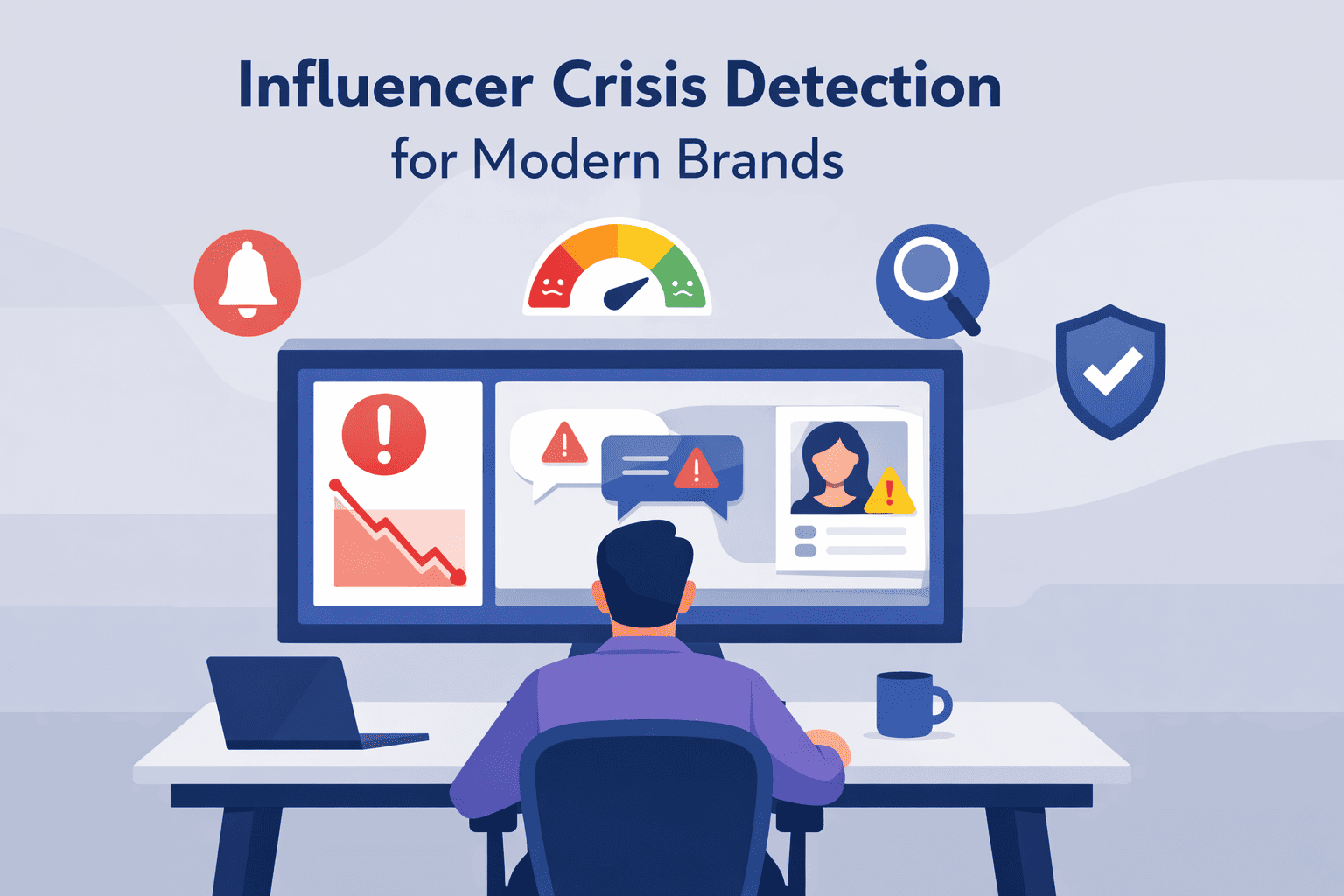
Influencer Crisis Detection for Modern Brands
An influencer crisis can cost you trust and revenue. It’s about spotting the danger signs before they blow up. The...